Full Tree Removal vs Canopy Thinning for View Restoration: What White Oak Recommends on CT Shoreline Properties
Why This Decision Matters More on CT Shoreline Properties
Stand on a deck in Clinton, Madison, Guilford, Branford, or Old Saybrook and the problem is usually easy to describe: the water is still there, but the view is closing in. A few years ago, Long Island Sound was visible from the kitchen window. Then the oaks filled out. The maples pushed wider. The lower branches dropped into the sightline. By the time the homeowner calls, the view has not disappeared all at once. It has been slowly absorbed by the canopy.
That is where the decision becomes more complicated than most people expect.
Do you remove the tree entirely, or do you thin the canopy and keep the tree in place?
The wrong answer can create a permanent problem. Remove too much and the property looks stripped, exposed, and less private than the homeowner wanted. Thin too little and the water view is still blocked after the crew leaves. Thin incorrectly and the tree may respond with weak regrowth, sunscald, structural stress, or a canopy shape that looks worse than it did before the work started.
White Oak does not approach view restoration as a clear-cutting job. On Connecticut shoreline properties, the correct answer is almost always based on a tree-by-tree assessment: which trees block the primary sightline, which trees are valuable enough to preserve, which trees are declining, which branches can be removed safely, and which removals may require local or coastal review before work begins.
This guide explains when full tree removal makes sense, when canopy thinning is the better recommendation, and why the best view restoration plan on a CT shoreline property often uses both methods carefully rather than treating either one as the default solution.
Why This Decision Matters More on CT Shoreline Properties
View restoration on the Connecticut shoreline is different from ordinary backyard tree work. The trees are often mature. The lots are often tight. The soil, salt exposure, wind direction, and proximity to wetlands or coastal resources can all affect what should be done and how the work should be planned.
A homeowner in inland Connecticut may be trying to open light over a lawn. A homeowner on the shoreline may be trying to restore a water view that is directly tied to how the property is used, enjoyed, photographed, and valued. That creates a stronger incentive to remove more than necessary, especially when the blocked view has been frustrating for years.
But shoreline landscapes also have character that is difficult to replace. Mature oaks, maples, beeches, cedars, and shoreline evergreens do more than block or reveal a view. They frame the property, soften the house from the water, protect privacy from neighbors, buffer wind, stabilize slopes, and provide shade that can make a deck usable in summer.
That is why the question should not be, which trees are in the way? The better question is, what is the least disruptive scope of work that restores the specific view the homeowner actually wants?
What Full Tree Removal Actually Solves
Full tree removal solves a specific problem: the entire tree is the obstruction, the tree is no longer worth preserving, or the long-term maintenance burden of keeping it in place outweighs its value to the property.
On a shoreline lot, one poorly positioned tree can block far more view than its size suggests. A single maple growing directly in the center of the sightline from the main deck may hide the widest part of the water, while five trees on the sides of the property contribute privacy and framing without interfering with the view at all. Removing the wrong five trees does less than removing the one that actually matters.
This is why White Oak begins view restoration by looking from the locations that matter: the deck, the living room, the kitchen sink, the upstairs bedroom, the pool area, or the primary outdoor seating space. The crew is not simply looking at trees from the yard. They are looking at the view from the places where the homeowner actually experiences the property.
When White Oak Recommends Full Tree Removal
Reason 1: The trunk and main scaffold limbs are blocking the sightline
Canopy thinning removes selected branches and foliage density. It does not move the trunk. It does not relocate major scaffold limbs that sit directly in the view corridor. If the central stem of the tree stands exactly between the home and the water, thinning may create small openings around the obstruction, but it will not restore a clean, meaningful view.
In that situation, full removal may be the honest recommendation. Not because removal is always better, but because the part of the tree causing the problem is not removable without removing the tree itself.
This happens frequently on established properties in Clinton, Madison, and Guilford where trees were planted or allowed to grow before the current owner cared about a particular water-facing sightline. The tree may be healthy. It may be attractive. It may also be in exactly the wrong place.
Reason 2: The tree is structurally compromised or declining
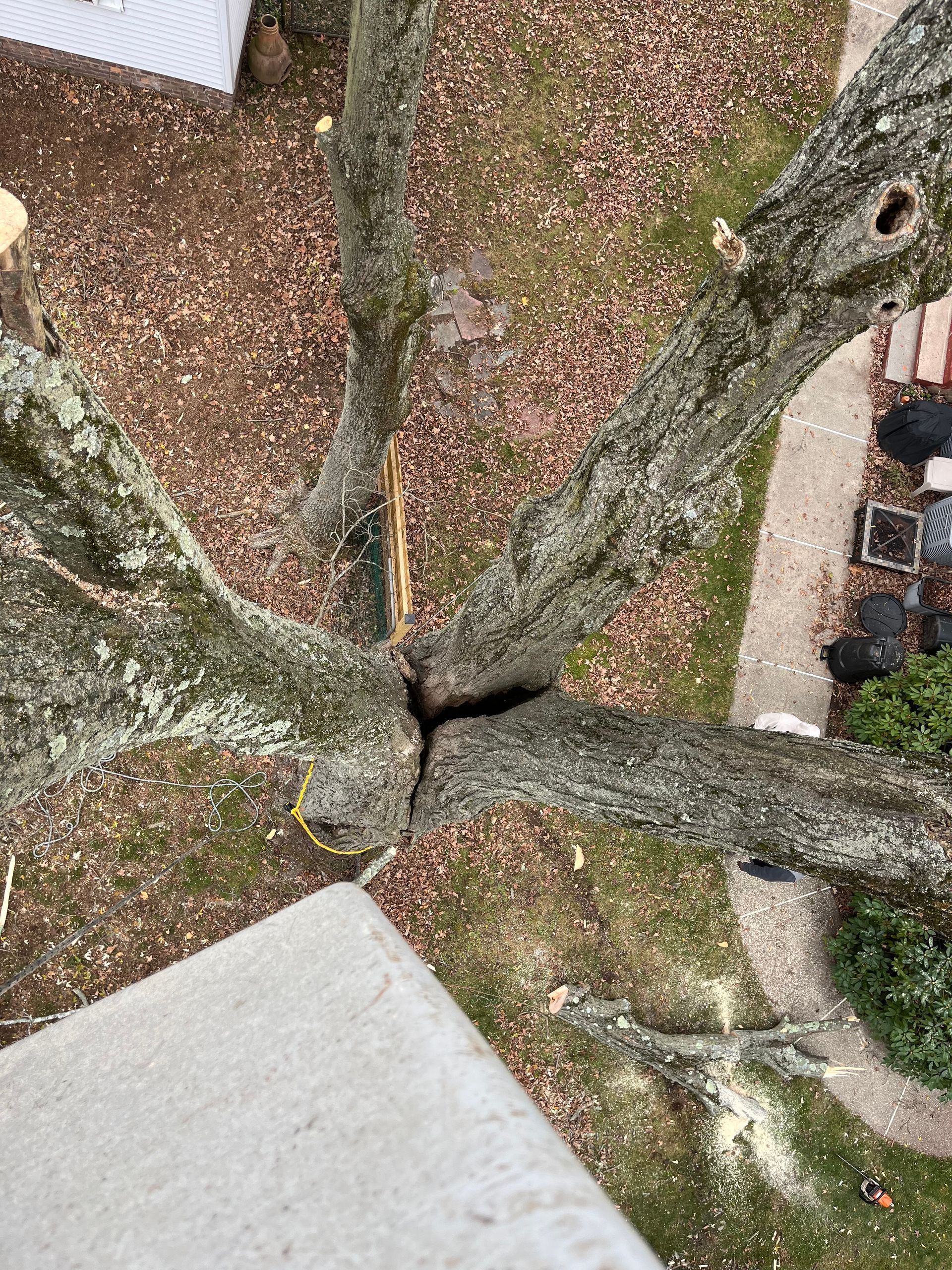
View restoration should never preserve a tree that is already becoming a hazard just because the homeowner wants to avoid removal. If a tree has advanced decay, a worsening lean, root plate movement, major trunk cracks, large dead sections in the crown, or significant storm damage, thinning may temporarily improve the view while leaving the real risk in place.
On shoreline properties, wind exposure matters. A declining tree that looks manageable on a calm day may be the same tree that fails during the next nor'easter or tropical storm remnant. If the tree is already losing structural integrity, full removal is often the safer and more responsible recommendation.
This is where view restoration overlaps with hazard assessment. The goal is not just to open the water view. The goal is to make a sound decision about the future of every tree involved.
If the concern is safety rather than view alone, White Oak's Tree Removal service explains how the team evaluates hazardous, storm-damaged, and access-limited trees across the Connecticut shoreline.
Reason 3: The tree will keep closing the view faster than maintenance can manage it
Some trees respond to pruning with vigorous regrowth. Others are positioned so close to the target sightline that even good pruning only buys a short window before the same branches return. If a homeowner wants a stable, long-term view corridor rather than a temporary opening, repeated thinning on the same poorly placed tree may not be the most practical plan.
A tree that requires aggressive canopy work every season to remain acceptable is usually telling the crew something important: it does not belong in that sightline. Removing it and managing the surrounding trees more lightly can produce a cleaner, healthier, and more natural result over time.
This is especially true when the tree is young enough that removal is straightforward now, but will become a larger and more expensive problem if left in place for another ten years.
Reason 4: Removal creates a better overall landscape plan
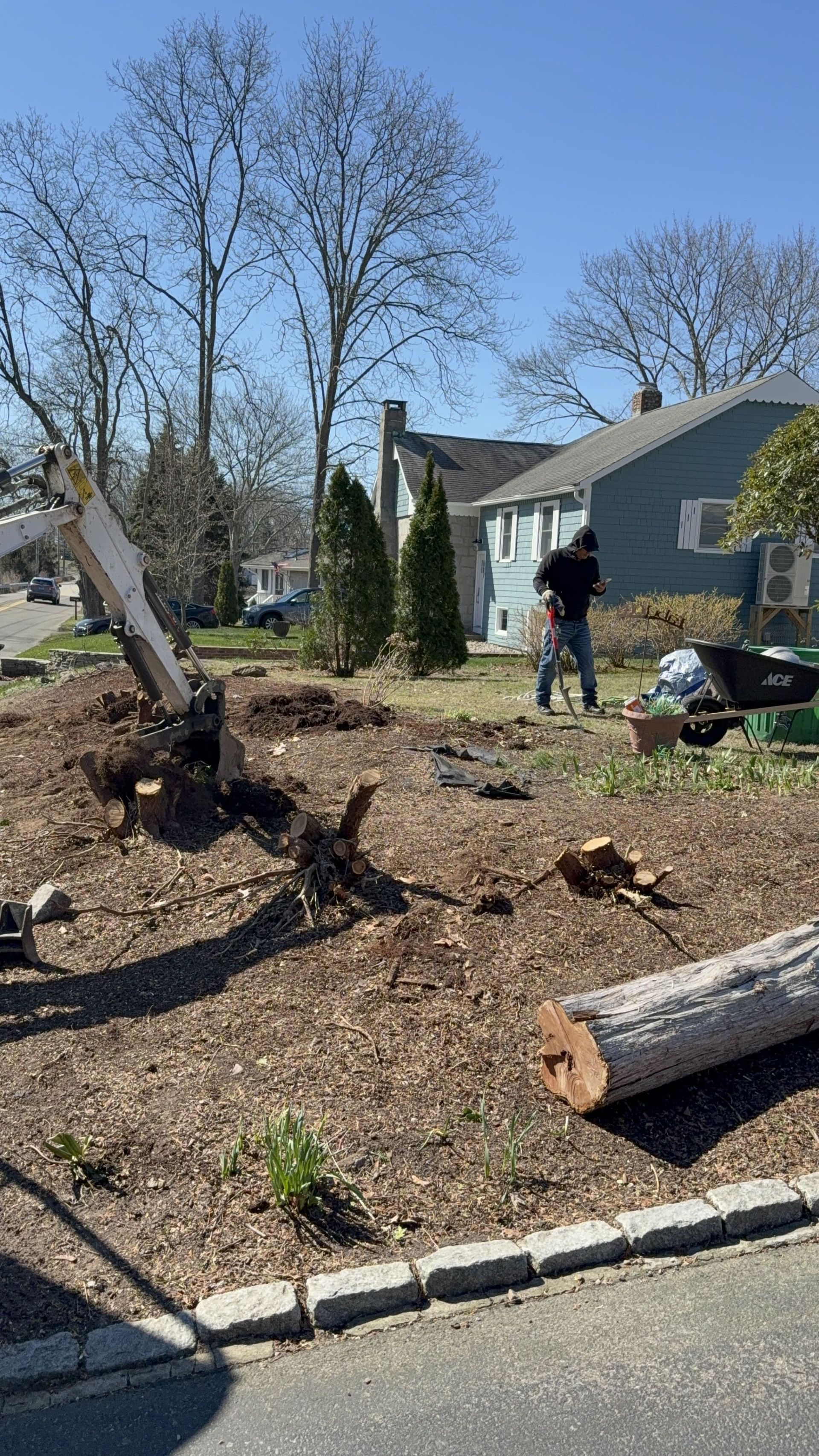
Tree removal is not always about subtraction. On many shoreline properties, removing one or two specific trees allows the remaining trees to look better, grow with less competition, and frame the water view more naturally. It can also create space for privacy screening in a location that makes more sense than the tree being removed.
For example, a homeowner may remove a view-blocking maple near the rear sightline while preserving side-yard evergreens that screen the neighbor. Another property may remove a declining oak near the deck, then replant a more appropriate specimen tree outside the primary view corridor. The result is not a bare yard. It is a better organized landscape.
When removal opens an unwanted privacy gap, White Oak can pair view work with Privacy Screening and Tree Replanting so the water view opens while side-yard privacy is restored intentionally.
What Canopy Thinning Actually Solves
Canopy thinning solves a different problem. It is used when the tree itself should remain, but the density of branches and foliage is limiting light, air movement, or visibility through the crown.
The International Society of Arboriculture describes thinning as a pruning approach used to reduce foliage density at the crown periphery, sometimes to increase wind or light penetration for aesthetic reasons and to promote interior foliage development. In view restoration, that same principle is applied to sightlines. The tree remains part of the property, but the canopy becomes less visually solid.
Done correctly, canopy thinning should not make the tree look hacked apart. A good thinning job is often most obvious from the view it restores, not from the cuts themselves. The tree still looks like itself. It simply stops functioning like a green wall.
When White Oak Recommends Canopy Thinning
Reason 1: The tree is valuable and healthy enough to preserve
Many CT shoreline properties have mature trees that are worth preserving. A large white oak, red oak, beech, maple, or cedar may be one of the defining features of the property. Removing it may open the water view, but it may also remove shade, privacy, scale, and the mature landscape character that makes the property feel established.
If the tree is structurally sound and the obstruction is mostly foliage density rather than trunk placement, canopy thinning is often the better recommendation. The homeowner keeps the tree, the landscape keeps its anchor, and the view becomes more usable.
Reason 2: The view only needs selective openings, not a completely open corridor
Not every homeowner wants a wide-open, exposed view. Some want filtered water views through a mature canopy. Others want the water visible from the deck but still want the house screened from neighboring properties or from the street. In those cases, full removal can be too aggressive.
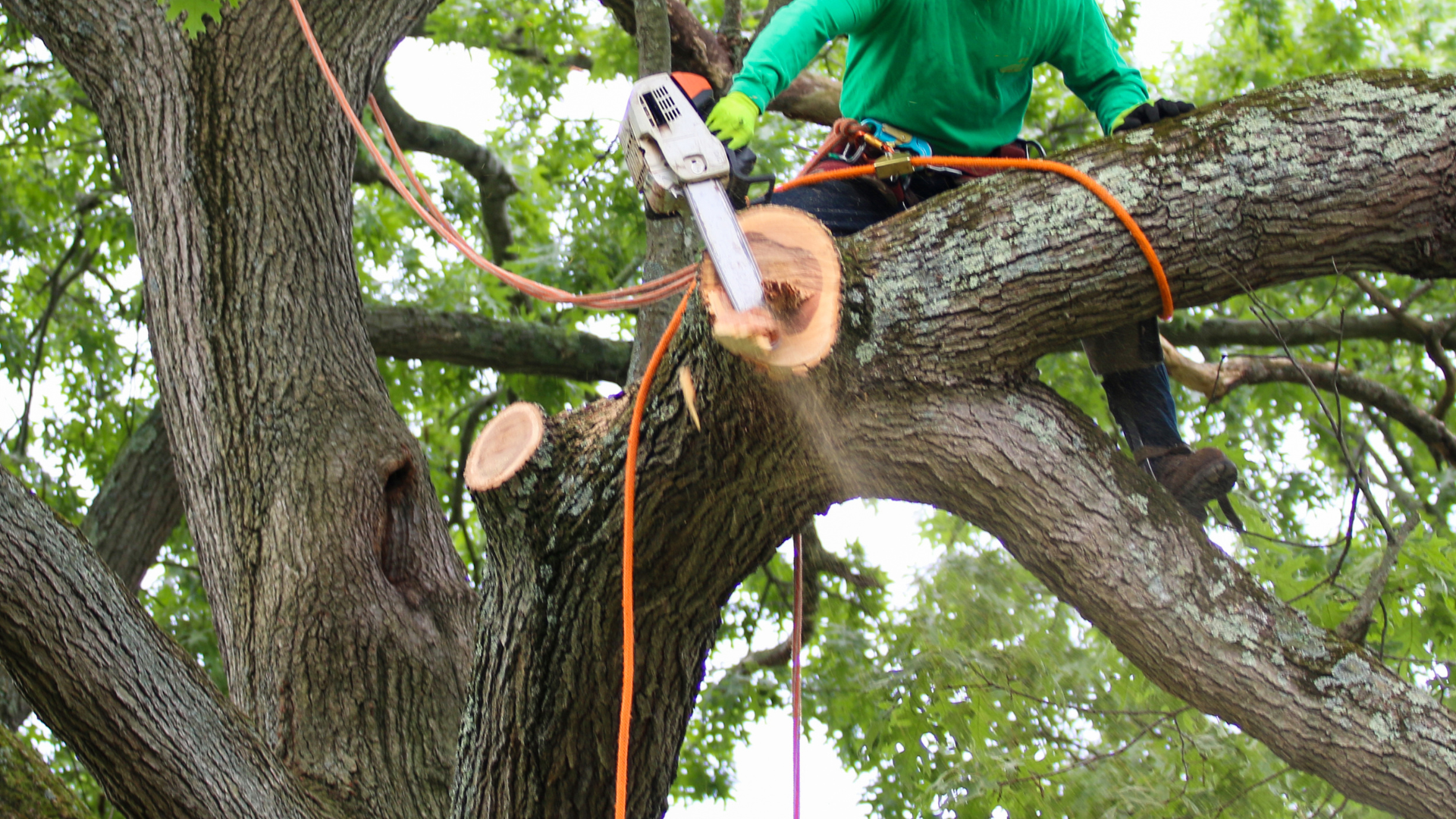
Canopy thinning gives the crew more control. Instead of eliminating the entire tree, the climber removes specific branches that are responsible for visual density from the homeowner's main vantage points. The final view can feel natural, layered, and private rather than stripped.
Reason 3: The property needs wind, privacy, or shade protection
Trees on the shoreline are not only visual elements. They also break wind, shade decks and patios, reduce glare, protect plantings, and help define outdoor rooms. Removing too many trees at once can change how a property feels in ways the homeowner did not intend.
This matters on exposed waterfront and near-water properties from Branford to Old Lyme. The same trees that block part of a view may also soften wind off Long Island Sound. The right plan may be to thin the canopy, raise selected lower limbs, and preserve the structural presence of the tree rather than removing it completely.
Reason 4: Site conditions or regulations favor a lower-impact approach
Some shoreline parcels are affected by coastal area considerations, wetlands, slopes, bluffs, or local rules that influence vegetation work near the water. Requirements vary by town and parcel, but the principle is simple: work near sensitive coastal resources should be planned before cutting begins.
Connecticut DEEP coastal guidance recognizes that local land-use tools may limit clearing vegetation simply to enhance views and may restrict cutting on or above bluffs and escarpments. That does not mean view restoration cannot be done. It means the work should be evaluated carefully, especially when removal is near the water, near a slope, or within a regulated area.
Canopy thinning, strategic limbing, and selective pruning may provide a practical way to improve sightlines while limiting disturbance when full removal is not the right first step.
Why Topping Is Not View Restoration
The worst version of view restoration is topping. Topping means cutting back large portions of the upper canopy without regard for the tree's natural structure, branch collar, or long-term response. It may create a sudden view for a short period, but it usually damages the tree and creates future problems.
Industry guidance consistently separates proper reduction and thinning from topping. Proper reduction cuts maintain structure by cutting back to suitable lateral branches. Proper thinning removes selected branches without stripping the interior or leaving weak end-weighted limbs. Topping does neither.
Purdue Extension warns that pruning should avoid damage to the branch collar and branch bark ridge, and that no more than one-quarter of the green tissue should be removed during a single pruning dose. Those limits matter during view work because an overaggressive crew can remove too much live canopy in pursuit of a quick opening.
A topped tree often responds with fast, weakly attached shoots. Those shoots can fill the view again quickly, but with poorer structure than the original branches. The homeowner gets a short-term opening and a long-term maintenance problem. That is not restoration. It is damage with a temporary view.
For homeowners comparing proper pruning to harmful cutting, White Oak's Tree Pruning Explained article is the most relevant internal resource to read alongside this guide.
Full Removal vs Canopy Thinning: The Practical Comparison
| Decision Factor | Full Tree Removal | Canopy Thinning |
|---|---|---|
| Best use | When the trunk, main structure, tree health, or location makes preservation impractical. | When the tree is healthy and the view is blocked mainly by canopy density. |
| Visual result | Creates the largest opening, but may expose the property if not planned carefully. | Creates a filtered or framed view while keeping the mature tree in place. |
| Tree health | Removes the tree entirely, which may be appropriate for declining or hazardous trees. | Must be done conservatively to avoid stress, decay, or weak regrowth. |
| Privacy impact | Can reduce privacy if the tree also screens neighbors or the road. | Often preserves side screening and landscape character. |
| Long-term maintenance | Lower maintenance for that specific tree, but may require replanting or landscape adjustment. | Requires periodic maintenance as new growth develops. |
| Best CT shoreline example | A declining maple directly centered in the Long Island Sound sightline from the deck. | A healthy oak whose leaf density blocks water visibility, but whose structure frames the property well. |
What White Oak Looks at Before Recommending Either Option
1. The exact viewing locations
A view restoration plan starts from the house, not from the base of the tree. The crew needs to see what the homeowner sees from the deck, kitchen window, living room, bedroom, patio, or pool area. The primary view corridor may be completely different from the view that appears obvious from the lawn.
This is why phone estimates do not work for serious view clearing. The difference between removing one tree and thinning three trees may only be visible from a specific second-floor window or from one corner of the deck.
2. Which tree is doing the actual blocking
Homeowners often identify the largest tree as the problem because it dominates the yard. In practice, the largest tree is not always the view blocker. A smaller tree closer to the house, or a cluster of mid-sized stems in the lower sightline, may be responsible for most of the obstruction.
White Oak identifies the actual blockers before recommending removals. That keeps the scope tighter and helps avoid unnecessary cutting.
3. Tree condition and structural value
A healthy mature tree gets a different recommendation than a declining tree in the same location. The crew looks at crown density, deadwood, included bark, trunk defects, root conditions, prior storm damage, species characteristics, and how the tree has responded to past pruning.
If the tree is healthy and valuable, preservation through thinning may be the first recommendation. If the tree is declining or structurally compromised, removal may be the more responsible choice even if thinning could temporarily improve the view.
4. Site access and protection of the property below
Many established shoreline properties have narrow side yards, stone walls, mature plantings, fences, patios, septic areas, and soft ground that limit how equipment can be used. The removal or thinning method must fit the site without damaging the landscape that the homeowner is trying to improve.
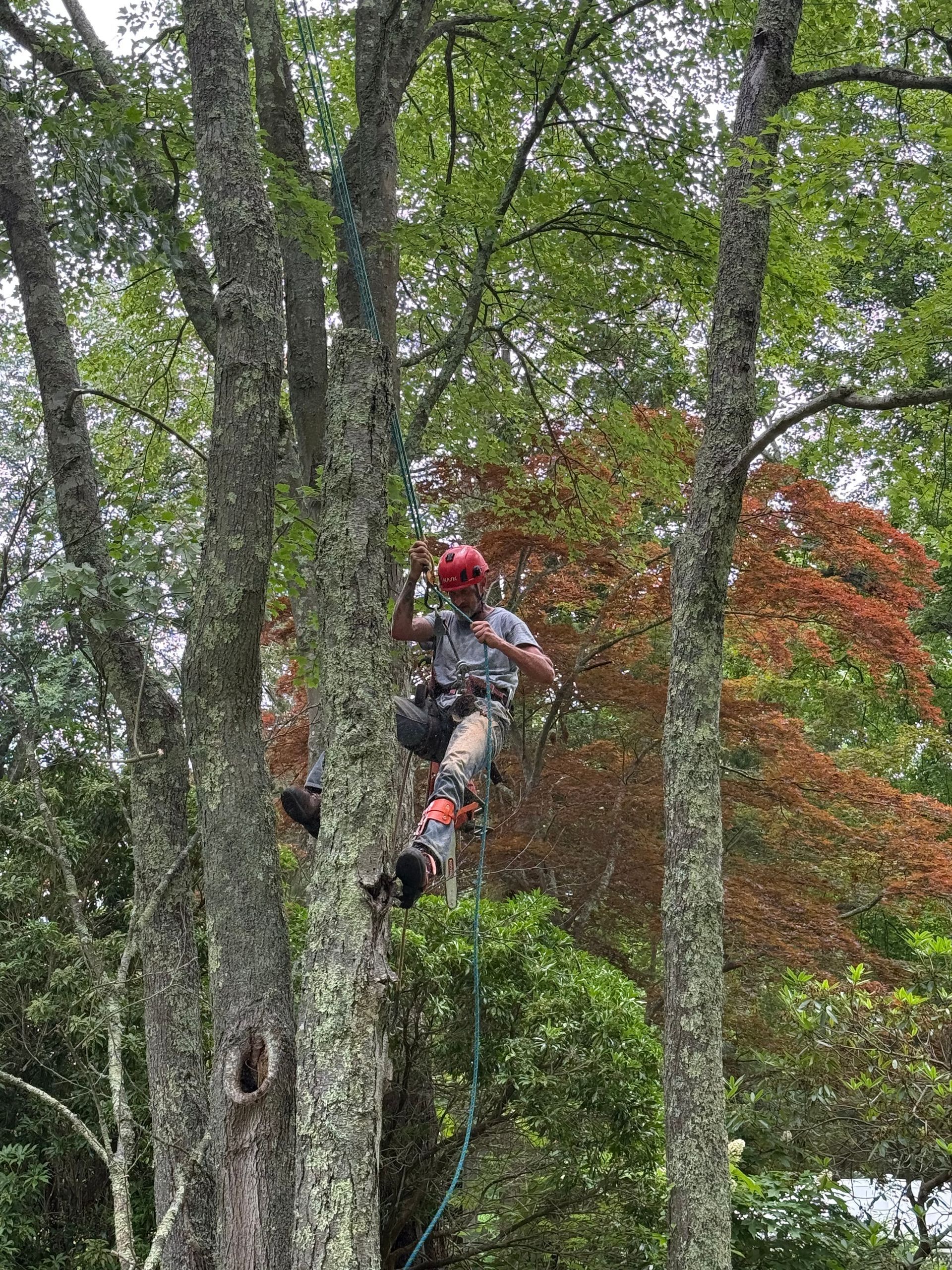
This is where climbing specialists matter. A climber working from inside the canopy can make selective cuts that are difficult to reach from outside the tree. For removals, climbing and rigging can lower sections carefully when a bucket truck or crane does not have ground access.
For tight-access shoreline work, the same principles discussed in White Oak's article on why tree emergencies require a climbing specialist also apply to view restoration, especially when trees stand close to houses, fences, gardens, and neighboring properties.
5. Coastal management and town requirements
View restoration near the Connecticut shoreline should not be treated like ordinary inland pruning without first considering location. The Connecticut shoreline includes beaches, bluffs, tidal wetlands, and other coastal features. NOAA documentation on Connecticut's Long Island Sound shoreline describes a coastline made up of beaches, soft and rocky bluffs, and tidal wetlands, which is exactly why property-specific evaluation matters.
Some projects may be straightforward. Others may require town review, coastal area consideration, or additional care around slopes, wetlands, or water-facing vegetation. White Oak's role is to identify when the scope needs that extra review before the work begins.
Most View Restoration Projects Use a Combination
The choice is not always full removal or canopy thinning. On many CT shoreline properties, the best result comes from a combination: remove the few trees that truly block the view, thin the healthy trees that frame it, limb up lower branches that cut across the sightline, and leave the privacy trees that are doing useful work at the edges of the property.
A typical shoreline view restoration plan might look like this:
- Remove one declining maple directly in the center of the water view.
- Thin two mature oaks that frame the left and right side of the view.
- Raise selected lower limbs that block the deck-level sightline.
- Clear understory growth that has filled in below the main canopy.
- Preserve side-yard evergreens that maintain privacy from neighbors.
- Add new privacy screening where a removal creates an unwanted exposure.
That kind of plan is more precise than simply clearing everything between the house and the water. It restores the view while keeping the property looking like a mature Connecticut shoreline landscape rather than a freshly stripped lot.
This is the same philosophy behind White Oak's View Clearing and Waterfront View Restoration service: selective tree removal, canopy thinning, and strategic limbing used together to open sightlines without unnecessary clearing.
When Full Removal Is Usually the Better Recommendation
- The trunk stands directly in the primary water-view corridor.
- The tree is dead, declining, cracked, leaning, hollow, or structurally compromised.
- The tree has repeated storm damage and is likely to become a future hazard.
- The tree is crowding better trees that should remain.
- Previous bad pruning has created weak regrowth and poor structure.
- The species or location means the view will close again quickly after thinning.
- The homeowner wants a clean, open view from a specific interior or exterior vantage point, and the obstruction cannot be corrected by branch-level work.
When Canopy Thinning Is Usually the Better Recommendation
- The tree is healthy, structurally sound, and valuable to the property.
- The obstruction is mostly foliage density rather than trunk location.
- The homeowner wants a filtered or framed water view rather than full exposure.
- The tree provides useful shade, privacy, wind buffering, or landscape character.
- The project is near a sensitive area where less disturbance may be preferable.
- The tree can be improved with selective thinning, raising, or reduction cuts without removing too much live canopy.
- The view can be restored from the key vantage points without sacrificing the tree.
The Mistake Homeowners Make When Comparing Quotes
The most common mistake is comparing view restoration quotes as if every crew is proposing the same work. One company may quote full removal of several trees. Another may quote canopy thinning. A third may propose topping, which should not be accepted as proper view restoration. The prices may look different because the scopes are completely different.
Before choosing a contractor, the homeowner should understand exactly what is being recommended and why. Which trees are coming down? Which trees are being thinned? How much live canopy will be removed? Will the cuts follow proper pruning practices? Will debris be removed? Is stump grinding included? Is any replanting or privacy screening needed afterward? Are there any town or coastal considerations?
A lower quote that removes too much, damages valuable trees, or leaves the property exposed is not a better value. A higher quote that includes careful climbing, selective pruning, rigging, cleanup, and a clear plan may protect more of the property's long-term value.
How Often View Maintenance Is Needed After the First Restoration
Trees keep growing. Even a well-executed view restoration is not permanent without maintenance. The question is whether the project creates a manageable baseline or a recurring problem.
Most shoreline properties benefit from view maintenance every few years, especially when canopy thinning and limbing are part of the plan. Maintenance visits are usually less disruptive than the original restoration because the main decisions have already been made. The crew is not recreating the view from scratch. They are protecting the view that was already opened.
That is another reason full removal and thinning must be chosen carefully. A smart initial plan reduces the need for aggressive future work. A rushed initial plan often creates regrowth, exposure, and correction work that costs more over time.
What White Oak Recommends in Plain Terms
White Oak's recommendation is simple: remove the trees that genuinely need to come out, thin the trees worth saving, and avoid any cutting that damages tree health for the sake of a quick view.
If a tree is healthy, well placed, and only partially blocking the view, canopy thinning is usually the first conversation. If a tree is structurally compromised, directly centered in the sightline, or positioned in a way that will never allow a stable view, full removal may be the better long-term choice.
The best result is not measured by how many trees are removed. It is measured by whether the homeowner gets the view they wanted while the property still looks natural, intentional, and appropriate for the Connecticut shoreline.
Ready to Restore Your View Without Over-Clearing?
If your Long Island Sound view has slowly disappeared behind mature trees, the first step is not deciding between full removal and canopy thinning from the ground. The first step is walking the property with a crew that understands shoreline view corridors, mature tree structure, and the difference between opening a view and stripping a landscape.
White Oak Tree & Landscaping provides view clearing and waterfront view restoration throughout Clinton, Madison, Guilford, Branford, Old Saybrook, Old Lyme, Westbrook, Essex, Killingworth, North Branford, East Haven, Durham, and surrounding Connecticut shoreline communities. Every project starts with an on-site assessment, a clear recommendation, and written pricing before work begins.
If the right answer is thinning, White Oak will tell you. If the right answer is removal, White Oak will explain why. If the best answer is a combination, the plan will be built around the actual view you want to restore and the trees that deserve to remain.
Start with White Oak's
View Clearing and Waterfront View Restoration service page or
contact the team to schedule a free on-site assessment.
Recommended Internal Links
- View Clearing and Waterfront View Restoration
- Tree Removal
- Tree Trimming and Pruning
- Privacy Screening and Tree Replanting
- Property Maintenance and Landscape Renovation
- Service Area
- Tree Pruning Explained: What It Is and Why Your Trees Need It: Related blog for pruning standards and harmful practices.
- At-Risk Tree Removal: When Your Tree Cannot Wait But Is Not an Emergency Yet: Related blog for declining or hazardous trees that may affect view plans.
- 4 Reasons Tree Emergencies on the CT Shoreline Require a Climbing Specialist: Related blog for tight-access climbing and rigging context.
Recent Posts