At-Risk Tree Removal: When Your Tree Can't Wait But Isn't an Emergency Yet
The call White Oak Tree & Landscaping receives most often is not the emergency call. It is not the 11 p.m. call after a nor'easter drops a tree on a roof in Clinton, or the Saturday morning call when a split oak is hanging over a neighbor's fence in Westbrook. Those calls happen, and we respond to them.
The call we receive most often is earlier than that. It is the homeowner who has been watching a tree for a season or two, who notices something has changed, who is not sure whether it is serious enough to do something about but suspects it might be. The lean that was not there two years ago. The shelf fungi at the base that appeared in fall. The section of canopy that did not leaf out the same as the rest this spring. Something is off, and the homeowner knows it, but the tree has not done anything yet.
This is the at-risk window. It is the period between "this tree might be a problem someday" and "this tree is an active emergency right now." And it is the most important window to act in, because the options available during it are better, safer, and less expensive than the options available after it closes.
This article explains what at-risk trees look like, what the International Society of Arboriculture's risk assessment framework identifies as the conditions that place a tree in this category, and why the window between concern and crisis is shorter than most Connecticut shoreline homeowners expect.
The Difference Between an At-Risk Tree and an Emergency Tree
The distinction matters because it changes what is possible and what it costs.
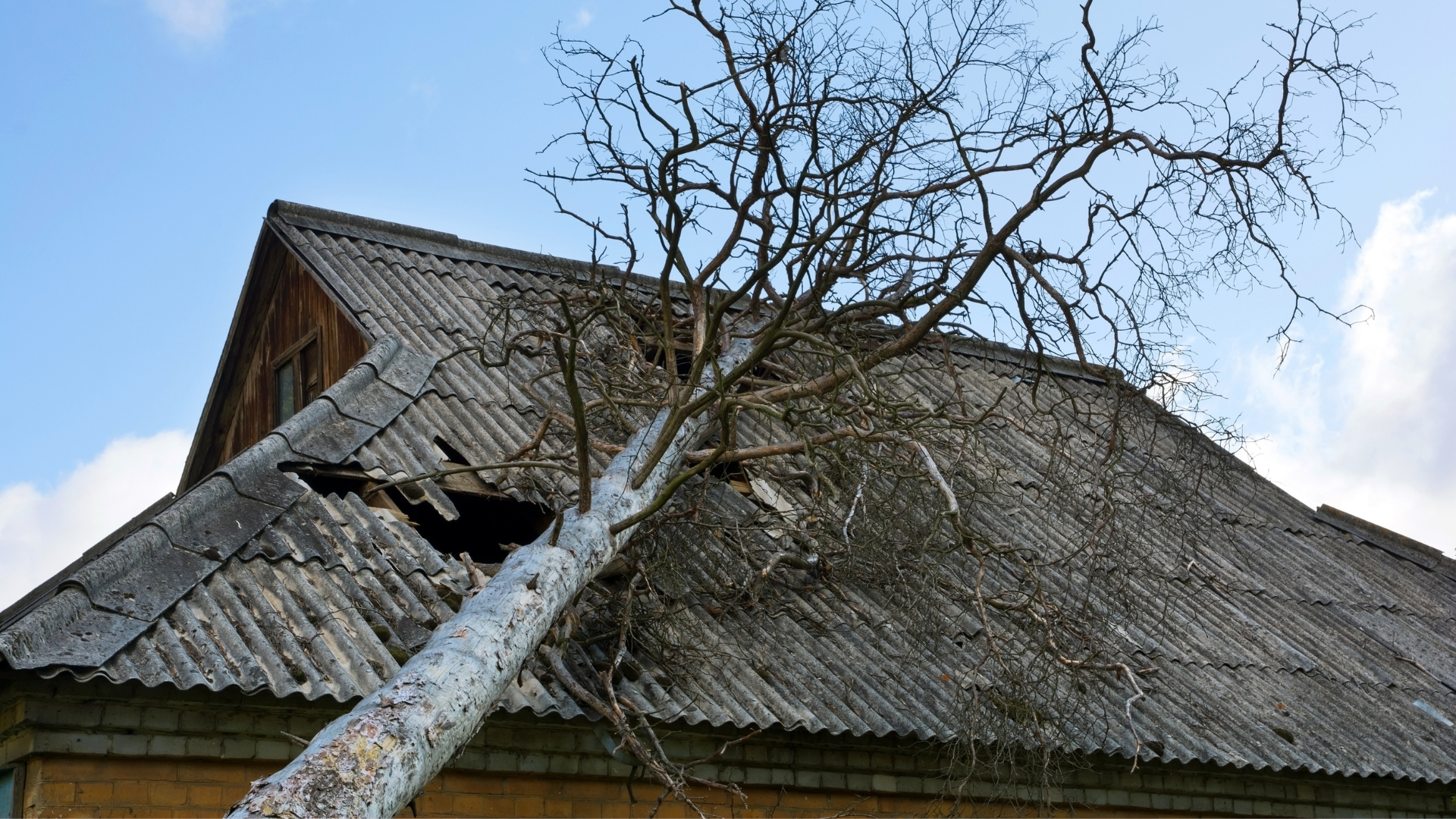
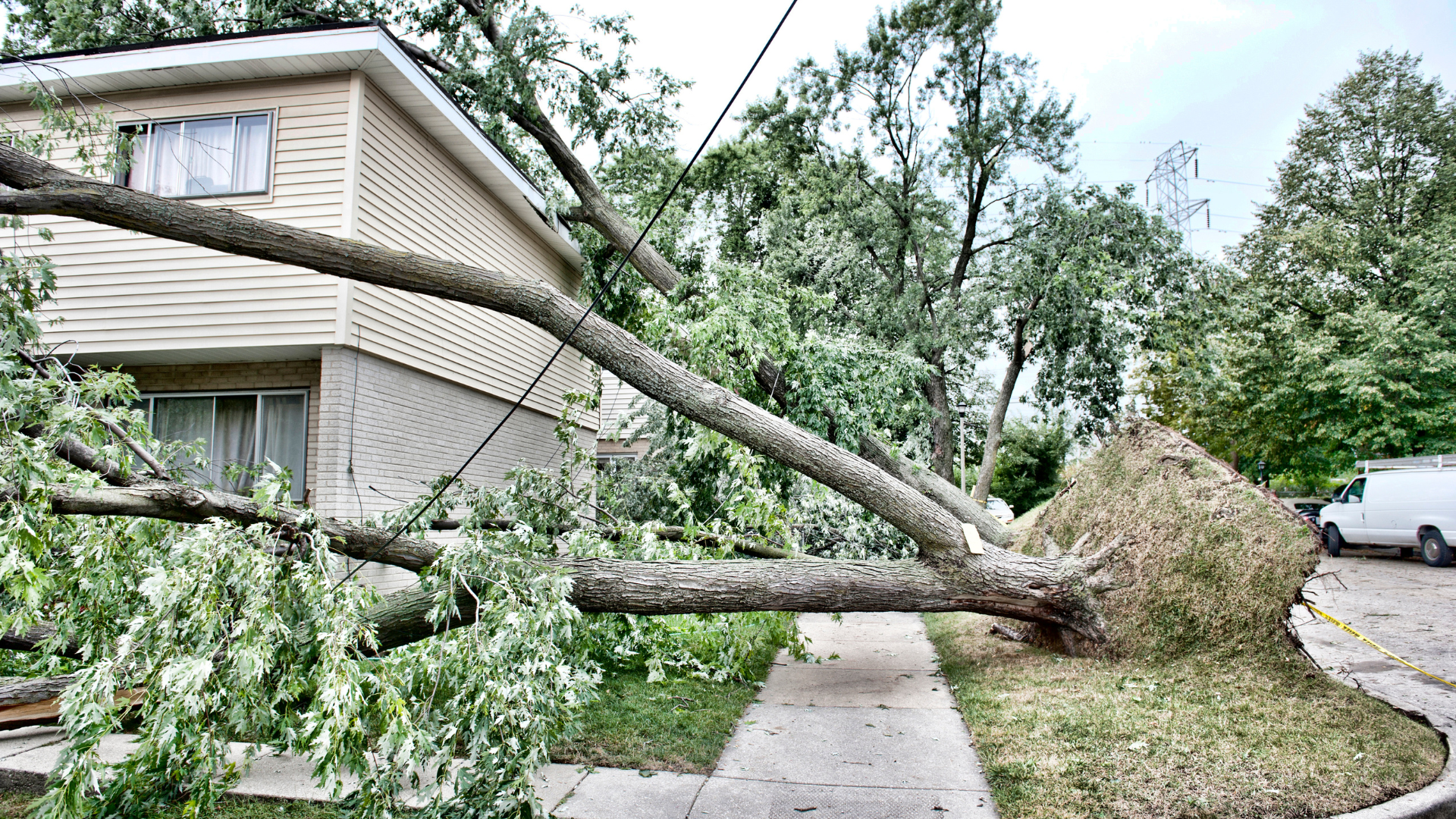
An emergency tree has already failed or is in active, imminent failure. A trunk has split. A tree has uprooted and is being held up by adjacent trees or a structure. A major scaffold limb is hanging by a strip of bark over a roof. Emergency response addresses what has already happened, under time pressure, often in difficult conditions, and at emergency service rates.

What At-Risk Trees Look Like: The Warning Signs That Matter
Not every sign of tree stress indicates a tree that needs to come down. Many trees with visible imperfections are structurally sound. What distinguishes an at-risk tree from one that simply shows its age is the combination and severity of specific structural defects identified by the ISA and the broader arboriculture research community.
Fungal Fruiting Bodies at the Base or on the Trunk
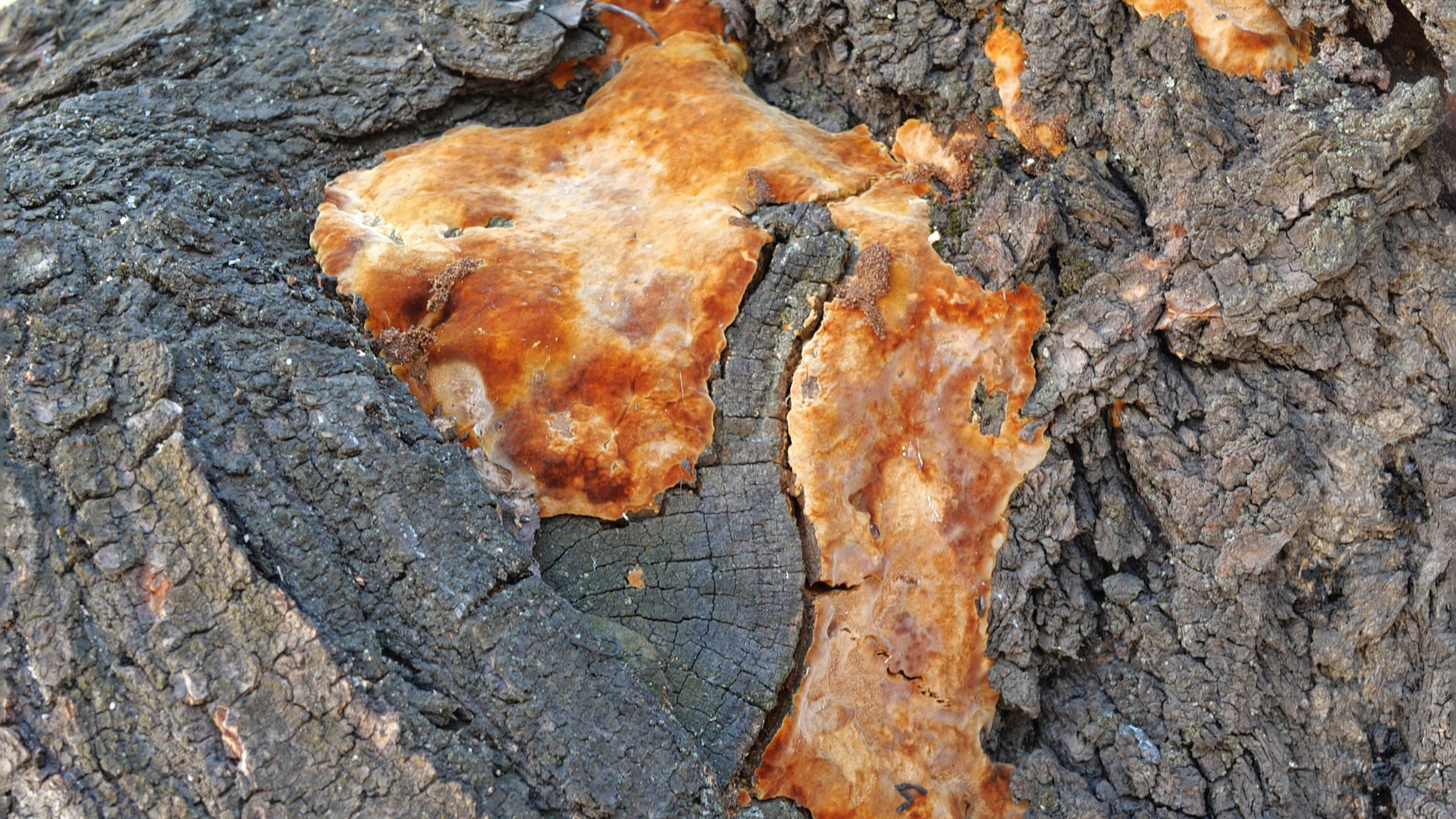
Shelf fungi, conks, and mushrooms growing directly on the trunk or from the root collar are among the most definitive external indicators of internal wood decay, according to ISA risk assessment guidelines. These structures are the visible above-ground portion of fungal organisms that have been breaking down the structural wood inside the tree, often for years before the external sign appears.
Research published in Arboriculture and Urban Forestry confirms that fruiting bodies are a reliable external indicator of significant internal decay in many species, particularly when they appear on the trunk rather than in the surrounding soil. A conk on the trunk is not a warning that decay might be present. It is confirmation that decay is present and has been progressing long enough to produce a reproductive structure.
For Connecticut shoreline properties, the mature oaks, maples, and elms common throughout Clinton, Westbrook, and Madison that develop trunk conks have typically been decaying internally for a substantial period before the conk appears. The question at that point is not whether decay is present but how much structural wood remains.
Significant Lean That Has Developed or Increased Recently
Trees grow with leans for many reasons, including light seeking and wind adaptation, and not all lean indicates structural risk. What distinguishes a concerning lean is:
- A lean that has developed or noticeably increased over a period of months or a season or two, rather than a lean that has been consistent for years
- Soil heaving, cracking, or mounding at the base on the uphill side of the lean, which indicates the root plate is beginning to lift
- A lean directed toward a structure, road, or occupied area, which places people or property in the potential fall zone
According to ISA risk assessment protocol, lean combined with evidence of root plate movement is one of the highest-priority combinations of defects because it indicates active failure progression rather than a static condition.
Cracks in the Trunk or Major Scaffold Limbs
Longitudinal cracks running along the trunk or major branches, particularly cracks that originate at branch unions, are indicators of structural compromise that the ISA identifies as conditions warranting careful evaluation. Cracks in wood that is already decayed are specifically identified in ISA certification materials as potential indicators of imminent failure.
Cracks are particularly significant on Connecticut shoreline properties because the freeze-thaw cycles that run through every winter expand existing cracks with each cycle. A crack that is stable in fall becomes larger in spring. A crack that was manageable in a small-diameter limb becomes a structural failure point as the limb continues to grow and add weight above it.
Co-Dominant Stems with Included Bark
A co-dominant stem configuration is when two roughly equal leaders grow from the same origin point, forming a V-shape at the union rather than a U-shape. When bark is included between these two stems at the union point, the connection is significantly weaker than a properly formed branch attachment because the included bark prevents the wood fibers from interlocking across the union.
According to ISA arborist certification materials, included bark at co-dominant stem unions is one of the most common structural defects leading to major branch and stem failure. In young trees, this can be addressed with structural pruning that subordinates one leader. In mature trees with large-diameter co-dominant stems, the failure risk at the union increases with every year of additional growth and weight above it.
For large mature trees over Clinton and Westbrook properties, a co-dominant stem with included bark is a condition that warrants professional assessment and in many cases removal of the affected stem or the whole tree before the union fails under storm loading.
Significant Dead Wood Throughout the Canopy
Some dead wood in a mature tree's canopy is normal and does not by itself indicate a tree that needs removal. What distinguishes an at-risk condition is the quantity and location of dead wood:
- Dead wood comprising a significant portion of the total canopy, indicating the tree's vascular system is failing to support the crown
- Large-diameter dead limbs positioned directly above structures, driveways, or areas of regular foot traffic
- Dead wood in the upper crown combined with other defects lower on the trunk, creating a combined risk profile that exceeds what any single defect would produce
Dead branches do not recover. They continue drying, becoming more brittle, and reducing in the structural connection to the living wood below them. A large dead limb over a structure in Clinton or Madison is not a condition that improves over time. It deteriorates until the limb fails, either from its own weight or from wind loading during a storm.
Root Zone Damage from Construction or Soil Compaction
Root damage is one of the most common causes of tree structural failure on residential properties, and one of the least visible. Roots extend well beyond the canopy drip line and can be severed by trenching for utilities, compacted by construction equipment, or suffocated by grade changes that bury the root zone under added soil.
A tree with significant root zone damage may appear healthy in the canopy for one to several growing seasons after the damage occurs, as it draws on stored energy reserves. The structural failure risk, however, begins the moment the roots are compromised. The root plate that would otherwise hold the tree upright during a wind event has been reduced.
On Connecticut shoreline properties where utility work, driveway expansion, or construction activity has occurred within the past several years, mature trees near that work zone warrant assessment even if they currently appear healthy.
The Target Factor: Why Location Determines Urgency
The ISA's risk assessment framework evaluates not just the condition of the tree but what is in the path if it fails. This is called the target, and it is what separates a tree with identical defects on two different properties into two very different urgency categories.
A mature oak with significant internal decay standing at the back of a large rural property with no structures, roads, or regular foot traffic within its fall radius has a high failure likelihood but a low consequence of failure. A structurally similar oak standing 40 feet from a home in Clinton, with its fall radius covering the roof, the driveway, and the sidewalk, has the same failure likelihood but a consequence category that warrants immediate action.
For homeowners on the Connecticut shoreline, where residential lots are often smaller, where mature trees have grown into close proximity with structures over decades, and where properties frequently share boundaries with neighbors whose structures may be in a tree's fall radius, the target factor typically increases the urgency of at-risk tree decisions substantially compared to rural or larger-lot settings.
White Oak Tree & Landscaping has served over 3,000 properties across Clinton and the Connecticut shoreline since 1991. In a region where lots are compact, trees are mature, and nor'easters test structural integrity every winter, the combination of tree defect and target proximity is the assessment that determines how quickly action is warranted.
Why the At-Risk Window Is Shorter Than It Appears
The progression from at-risk to failure is not linear and is not predictable in its timing. A tree with significant internal decay and a trunk conk may stand for another three years or may fail in the next nor'easter. A co-dominant stem with included bark may hold through a decade of storms or may split on a calm August afternoon when thermal expansion stresses the union beyond its capacity.
What is consistent across tree failure research is that:
- Defects do not resolve themselves. Internal decay does not reverse. Included bark does not develop into proper wood fiber attachment. A root plate that has begun to lift does not re-anchor. The conditions that place a tree in the at-risk category are progressive, not static.
- Storm seasons compress the timeline. The Connecticut shoreline averages one to three significant nor'easters per winter, each of which applies sustained loading to every structural defect in every tree on the property. A defect that might take years to produce failure under calm conditions can produce failure in a single major storm event.
- The at-risk window has a practical end date. Once a tree's defects progress to the point where emergency removal is required, the planning advantages of the at-risk window are gone. Emergency removal in tight residential conditions on the Connecticut shoreline, where trees are often adjacent to structures, fences, and neighboring properties, is more complex, more costly, and carries more risk to surrounding property than a planned at-risk removal.
What White Oak Does Differently for At-Risk Trees
White Oak Tree & Landscaping is a climbing specialist operation. That distinction matters specifically for at-risk tree removal in the residential conditions common throughout Clinton, Westbrook, Madison, and the surrounding communities.
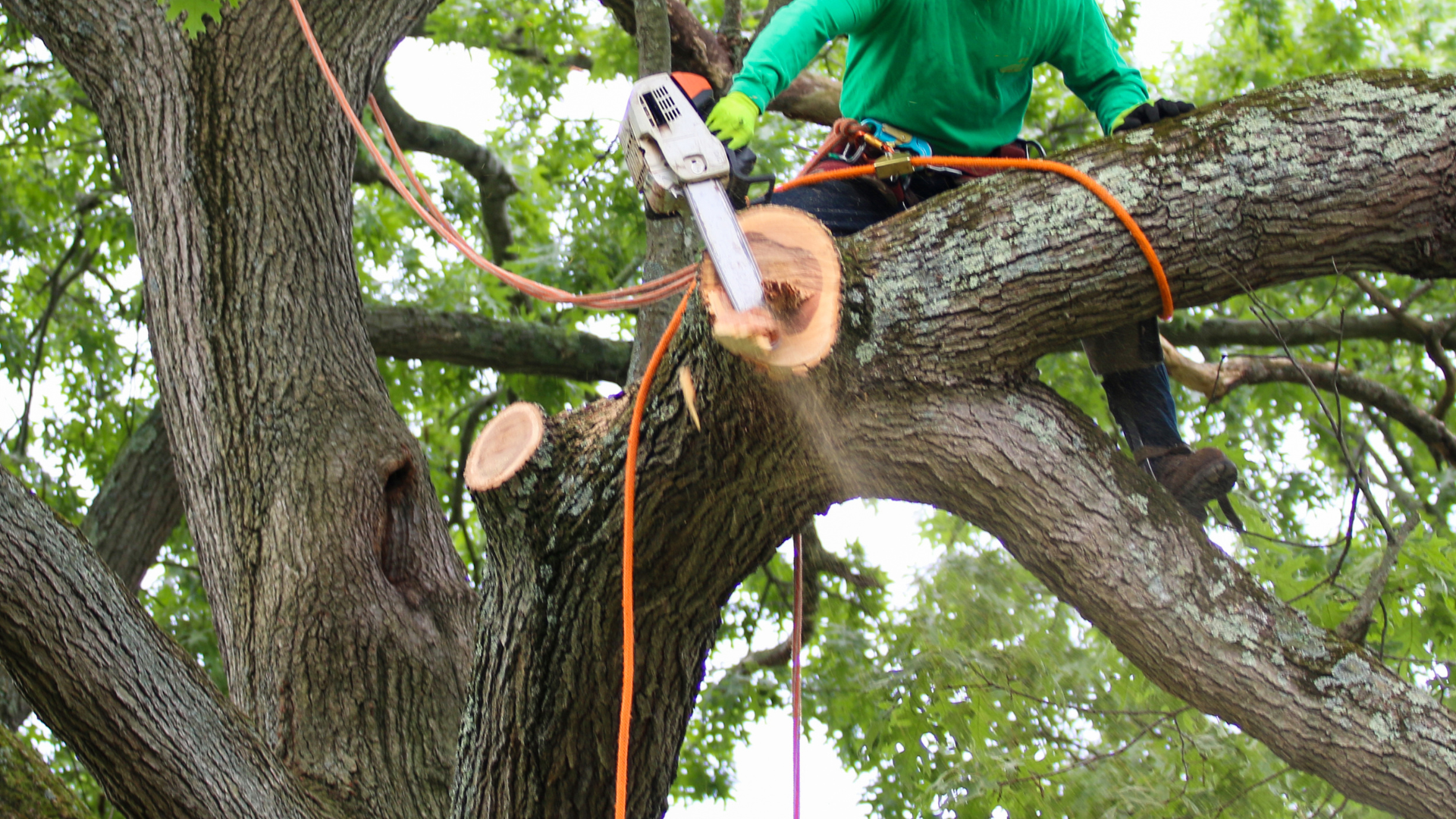
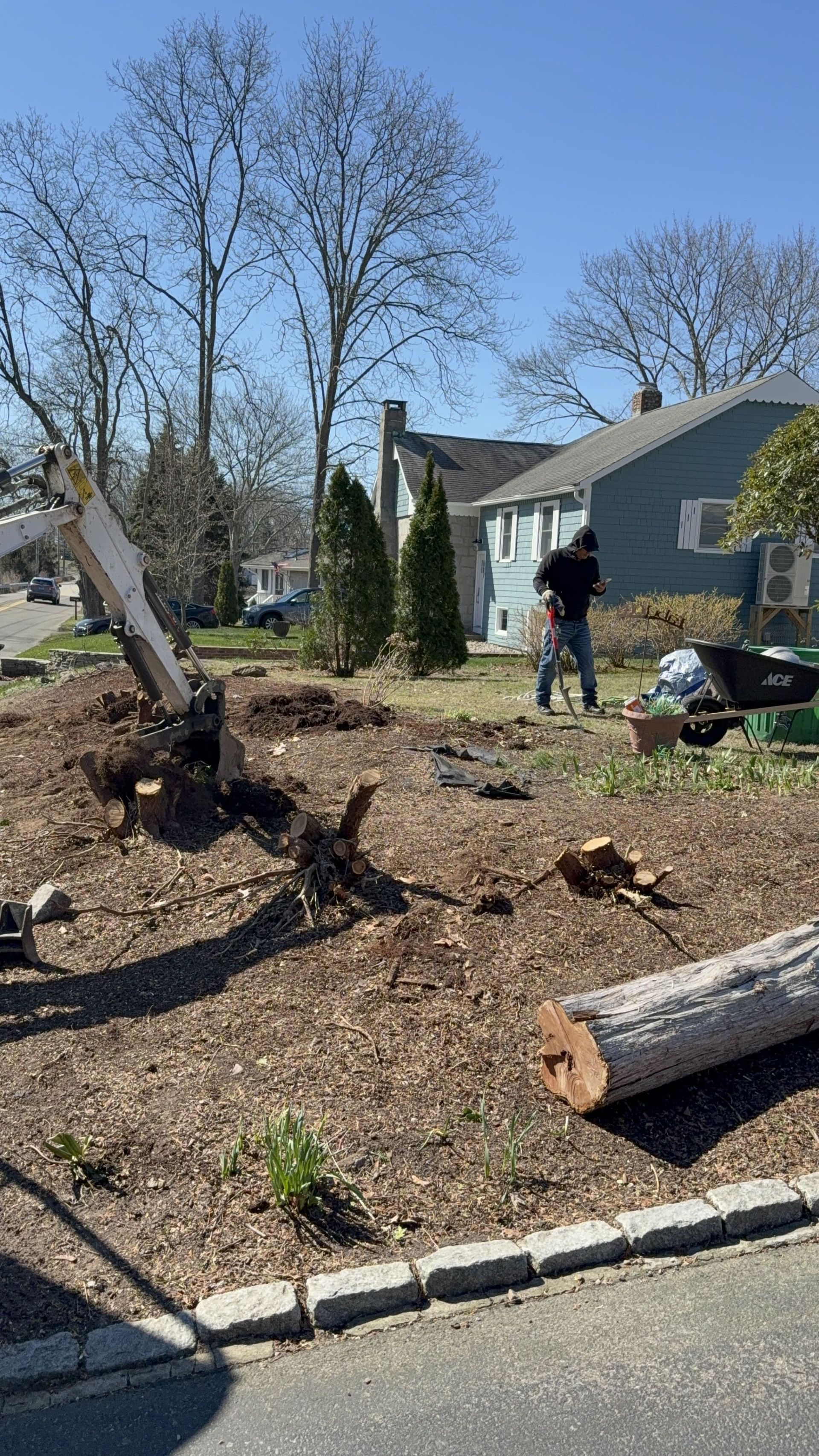
At-risk trees in established Connecticut shoreline neighborhoods are rarely in open space. They are adjacent to homes, over rooflines, between structures, next to power lines, or in yards where crane or heavy equipment access is not possible without significant disruption. The approach that makes technical sense for these removals is not ground-level felling. It is precision work from inside the canopy, removing the tree in controlled sections from the top down, with rigging systems that control where each section lands.
This is the work White Oak has been doing for over 35 years. Trees that other crews have declined because of complexity, proximity to structures, or access limitations are the jobs that White Oak's climbing specialists are specifically trained and equipped to handle.
For at-risk trees specifically, the climbing approach also allows a closer assessment of conditions that are not visible from the ground: the extent of decay visible at the entry point of a cavity, the actual wood condition at a crack or union, the degree to which internal failure has progressed. That information from inside the canopy informs both the removal plan and the documentation that homeowners need for insurance purposes when the removal is related to storm damage or hazard conditions.
The Free On-Site Assessment
White Oak Tree & Landscaping provides free on-site assessments for any tree that a property owner has concerns about. The assessment covers the conditions described in this article, the target environment, and an honest recommendation on what the tree needs: monitoring, pruning to address specific defects, or removal before the at-risk window closes.
Not every assessment ends in a recommendation to remove. Many do not. The goal is accurate information so that the homeowner can make a decision with full context, during the window when the best options are still available.
White Oak serves Clinton, Westbrook, Madison, Guilford, Old Saybrook, Old Lyme, Branford, and the surrounding Connecticut shoreline communities.