Tree Pruning Explained: What It Is and Why Your Trees Need It

Mike James • June 22, 2026

Most property owners in Clinton, Westbrook, Madison, and the surrounding Connecticut shoreline communities think of tree pruning as a cosmetic service. The tree is getting too big. A branch is hanging too close to the roof. The canopy looks uneven. These are real reasons to prune, but they are not the primary ones. The primary reasons that trees need regular pruning are structural, biological, and safety-related, and they apply whether the tree looks uneven or not.

A tree growing in your yard is not growing in a forest. In a forest, trees compete for light and space, they are surrounded by other trees that buffer wind loading, and the consequences of a limb failure are generally limited to what is on the forest floor. A tree growing on your Clinton shoreline property is growing next to your house, over your roof, alongside your driveway, and within reach of the people and vehicles on your property every day. The wrong branch in the wrong condition, failing at the wrong moment, produces consequences that a forest floor does not.

Tree pruning is the deliberate removal of branches and limbs to achieve a specific objective in the alteration of a tree's health and form, according to the International Society of Arboriculture. Executed correctly, it extends the life of the tree, reduces failure risk, manages growth relative to the built environment, and addresses conditions that would otherwise worsen progressively. Executed incorrectly, it creates wounds that invite disease and decay, produces structurally weak regrowth, and can permanently compromise a tree's form and health.

This guide explains what tree pruning actually involves, what the governing standards say, what distinguishes correct pruning from harmful practice, and what the trees on Connecticut shoreline properties specifically need given the climate and storm conditions they face.

The ANSI A300 Standard: What Professional Tree Pruning Requires

Tree pruning in professional arboricultural practice is governed by ANSI A300, the American National Standard for Tree Care Operations, developed under the American National Standards Institute and maintained by the Tree Care Industry Association. The pruning provisions of ANSI A300 define the practices that constitute acceptable pruning and those that cause harm, and they form the basis of what ISA Certified Arborists are trained to perform.

The ANSI A300 standard identifies the following as the recognized categories of pruning that serve legitimate tree care objectives:

  • Cleaning: The removal of dead, dying, diseased, weakly attached, and low-vigor branches from the crown. Cleaning is the most universally applicable pruning type because dead wood in any tree is both a health concern and a safety concern. Dead branches do not hold during storms. Removing them before they fail eliminates one of the most common sources of property damage and injury on Connecticut shoreline properties.
  • Thinning: The selective removal of branches to increase light penetration and air movement through the crown. Thinning reduces the wind sail effect of a dense canopy, which is directly relevant to Connecticut shoreline trees that face sustained nor'easter winds. A properly thinned canopy allows wind to pass through rather than pushing against a solid surface, reducing the load on the root system and the structural branch unions.
  • Raising: The removal of lower branches to provide clearance for structures, vehicles, pedestrians, and sight lines. For Clinton and Westbrook properties where mature trees overhang driveways, walkways, and roof edges, raising creates the clearance that keeps branches from contacting surfaces they should not contact.
  • Reduction: The reduction of the size of a tree or individual limbs, typically to provide clearance for utility lines, structures, or other targets in the tree's proximity. Reduction is performed by pruning back to a lateral branch of sufficient size to assume the terminal role, not by cutting to a stub. This distinction is critical and is addressed in detail in the section on harmful practices below.
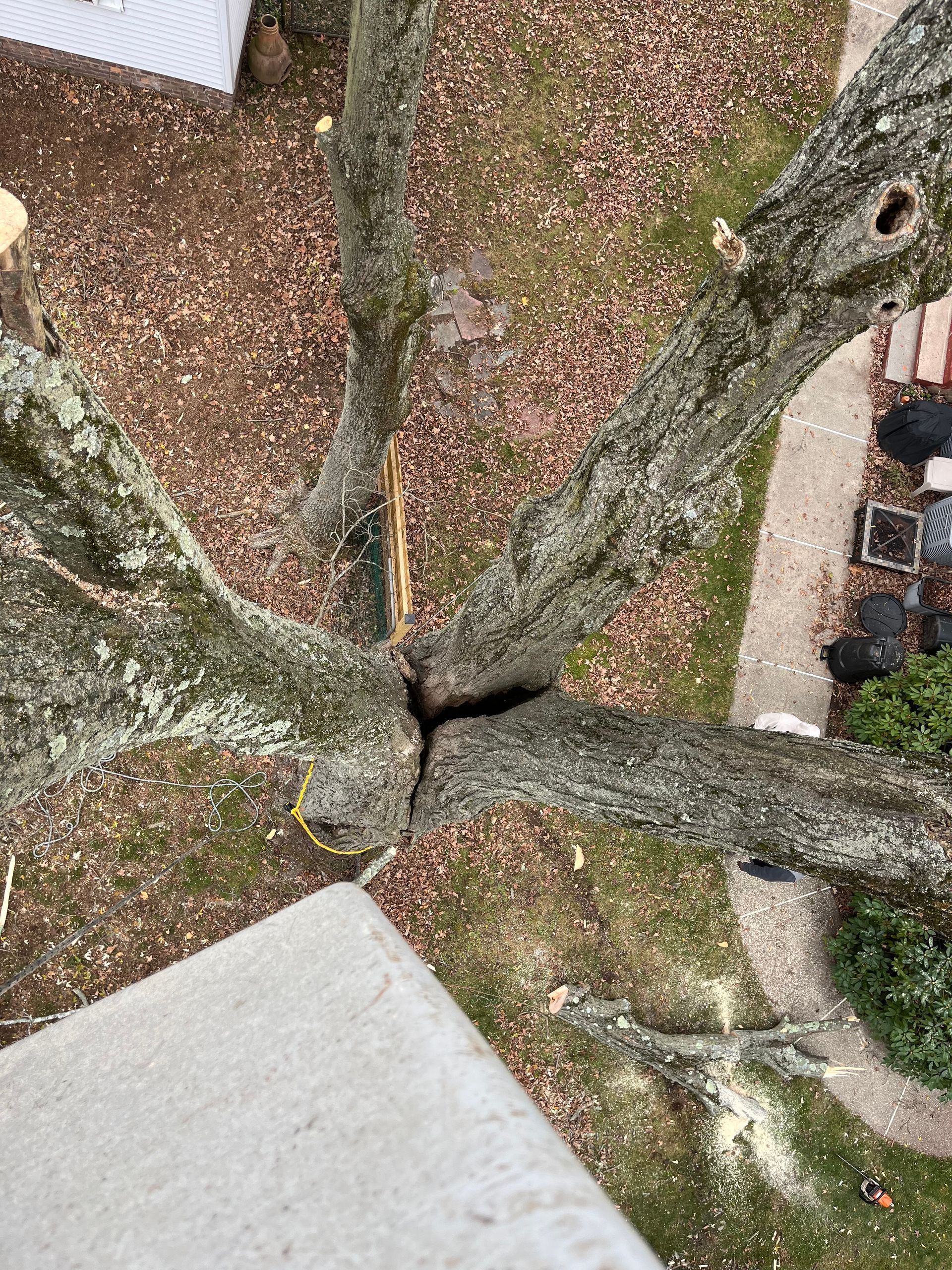
  • Structural pruning: The removal or subordination of branches to influence the orientation, spacing, radial distribution, and diameter of branches and the architecture of the tree. Structural pruning is most effective when applied to young trees while their form is still being established, but it also addresses co-dominant stem issues and other structural defects in mature trees before they become failure points.

Why Connecticut Shoreline Trees Need Regular Pruning

The specific conditions that Connecticut shoreline properties present make regular pruning more important, not less, than for trees in more sheltered inland locations.

Nor'easter wind loading

Connecticut averages one to three significant nor'easters per winter season, each delivering sustained winds that apply prolonged loading to every structural branch union in every tree on the property. A co-dominant stem with included bark, an overextended scaffold branch with excessive end weight, or a large dead limb that has not been removed are all conditions that nor'easter loading tests repeatedly. According to ISA risk assessment guidance, structural pruning that removes co-dominant leaders, reduces end weight on extended branches, and eliminates dead wood directly reduces the failure risk that these wind events create.


Salt air exposure

The Connecticut shoreline communities from Branford through Clinton to Old Lyme experience salt air exposure that affects tree health in ways that inland properties do not. Salt deposited on leaf surfaces interferes with photosynthesis, and salt in the soil affects water uptake through osmotic pressure. Trees already managing salt air stress have reduced vigor that makes them less able to compartmentalize pruning wounds, seal over cuts, and defend against secondary pest and disease challenges. Pruning frequency and approach on shoreline properties should account for this reduced vigor, which is one reason the ANSI A300 standard and ISA guidance recommend assessment of each tree's individual health and condition rather than applying a uniform pruning schedule.


Storm damage accumulation

Connecticut shoreline trees accumulate minor structural damage from storms across decades. Bark inclusions that began as minor stress points develop into significant structural weaknesses. Branch unions that handled the nor'easter of 2018 without incident may be close to their load limit by 2026. A professional pruning assessment by an ISA Certified Arborist identifies these accumulated conditions before they produce a failure event, addressing them during a planned pruning visit rather than during an emergency removal after a storm.


Mature tree canopy management

Many Clinton, Westbrook, and Madison properties have mature trees that have grown into close proximity with structures over decades. A white oak or red maple that was planted thirty feet from the house and was never pruned now overhangs the roofline, has scaffold branches extending directly over the driveway, and has a canopy that has not been assessed for dead wood or structural defects in years. Mature trees on Connecticut shoreline residential lots are where the consequences of deferred pruning are most significant, because the size of the potential failure and the proximity of structures to the fall zone both increase with the tree's age.

What Pruning Does for Tree Health

The health benefits of correctly executed pruning are specific and documented in arboricultural research.

Dead wood removal eliminates entry points for disease and decay

Dead branches are not inert. They are actively being colonized by the fungal and bacterial organisms that break down dead wood, and those organisms can spread from the dead wood into adjacent living tissue at the junction between the dead branch and the living stem. Removing dead wood cleanly with a proper cut at the branch collar, the slightly raised area at the base of the branch where it meets the trunk, allows the tree to compartmentalize the wound and form callus tissue over the cut surface. Leaving dead wood in place allows decay to progress inward.


Correct cuts heal; incorrect cuts create chronic wounds

The location and angle of a pruning cut determines whether it heals correctly. According to ISA Certified Arborist training materials, cuts made outside the branch collar remove the zone of tissue that produces callus growth. Cuts made inside the branch collar damage the trunk or parent stem tissue. Both produce wounds that are slower to close and more vulnerable to pathogen entry than a correctly placed cut at the branch collar. A proper cut at the correct location on a healthy tree heals over time as callus tissue grows from the cut edge inward. This healing capacity is why professional pruning, performed with knowledge of where the cut should be made, produces a fundamentally different result than uninformed branch removal.


Thinning improves light penetration and air circulation

Dense canopies that block light from reaching the interior of the crown produce interior branch dieback as the inner branches cannot photosynthesize effectively in the shade. Selective thinning that opens the canopy to light and air movement improves the health of interior branches, reduces conditions favorable to fungal disease in humid Connecticut summers, and produces a crown with better distributed live wood rather than a dense outer shell over a dead interior.


Structural pruning reduces long-term failure risk

A young tree pruned to develop a single dominant leader with well-spaced lateral branches growing outward at appropriate angles develops structural strength over its lifetime. The same species, left unpruned through its formative years, may develop co-dominant stems with included bark, multiple crowded leaders competing for the same space, and a branch architecture that accumulates structural defects. According to ISA guidance, structural pruning is most effective when applied to young trees while form is still being established, and young trees may need structural pruning every 1 to 3 years during this formative period.

What Tree Topping Is and Why It Causes Permanent Harm

No discussion of tree pruning is complete without addressing tree topping, because it is the single most damaging pruning practice applied to trees in residential settings and because it is still offered by some contractors who lack proper arboricultural training.

Tree topping is the cutting of the main trunk or large primary branches back to stubs, removing a substantial portion of the crown in one operation. It is distinct from every legitimate pruning category listed in ANSI A300. According to published Connecticut arboricultural guidance and ISA standards, tree topping is one of the most harmful things that can be done to a tree, and it is rejected by arborists and the ISA as an acceptable pruning method.

What topping does to a tree:

  • Creates large, poorly positioned wounds: The large-diameter stubs left by topping cuts are not at branch collar locations and do not produce effective callus closure. The exposed wood at the cut surface decays inward from the moment it is cut.
  • Stimulates fast-growing, structurally weak regrowth: The tree's response to the massive loss of photosynthetic capacity from topping is to produce vigorous epicormic shoots from the stubs. These shoots grow rapidly but attach to the parent stem through a narrow zone of tissue that does not develop the structural wood fiber attachment of a normally grown branch. The result is a tree that within a few years appears to have regrown its crown but has a crown composed of branches with fundamentally weak attachment points that are more prone to failure than the branches that were removed.
  • Permanently compromises the tree's form: A topped tree does not regrow its original form. It develops a dense, multiple-leader regrowth from each stub that produces a structurally inferior crown that requires ongoing management to prevent repeated failure risk accumulation.
  • Does not achieve the stated goals: Topping is most often proposed as a solution to a tree that is too large or too close to a structure. It does not solve this problem permanently because the regrowth that follows topping is typically faster-growing than the original growth, returning the tree to its pre-topped height within a few years while leaving it with a more hazardous structure than before.

The correct alternative when a tree is too large for its location is either reduction pruning to a lateral branch of sufficient size to assume the terminal role, which achieves size reduction without the wound and regrowth problems of topping, or removal and replacement with a species whose mature size is appropriate for the space. Both of these options require the judgment of an ISA Certified Arborist. Neither involves cutting to stubs.

How Often Connecticut Shoreline Trees Need Pruning

Pruning frequency is not the same for all trees. The correct interval depends on the species, the age and condition of the tree, the pruning objective, and the site conditions. According to ISA guidance, most mature trees benefit from professional pruning every 2 to 5 years. Young trees may need structural pruning every 1 to 3 years while their form is being established. Dead wood removal and safety pruning should happen whenever warranted, regardless of schedule.

For Connecticut shoreline properties, the conditions that warrant assessment outside the standard interval include:

  • After any significant storm event: Nor'easters, summer thunderstorms, and coastal storms can create new dead wood, split scaffold branches partially without detaching them, and produce structural changes that warrant assessment before the next major wind event
  • When new construction or excavation occurs near the root zone: Root zone disturbance affects tree structural integrity in ways that are not immediately visible and that may take one to several growing seasons to express as canopy symptoms
  • When any signs of internal decay are observed: Fungal fruiting bodies at the base or on the trunk, cavities, soft wood, or abnormal lean warrant an immediate assessment regardless of when the last pruning was performed
  • When a tree's canopy changes significantly between seasons: Failure to leaf out normally in spring, early leaf drop in summer, or unusual thinning of the crown are signs of stress that should trigger a professional assessment

White Oak Tree and Landscaping: Pruning on the Connecticut Shoreline Since 1991

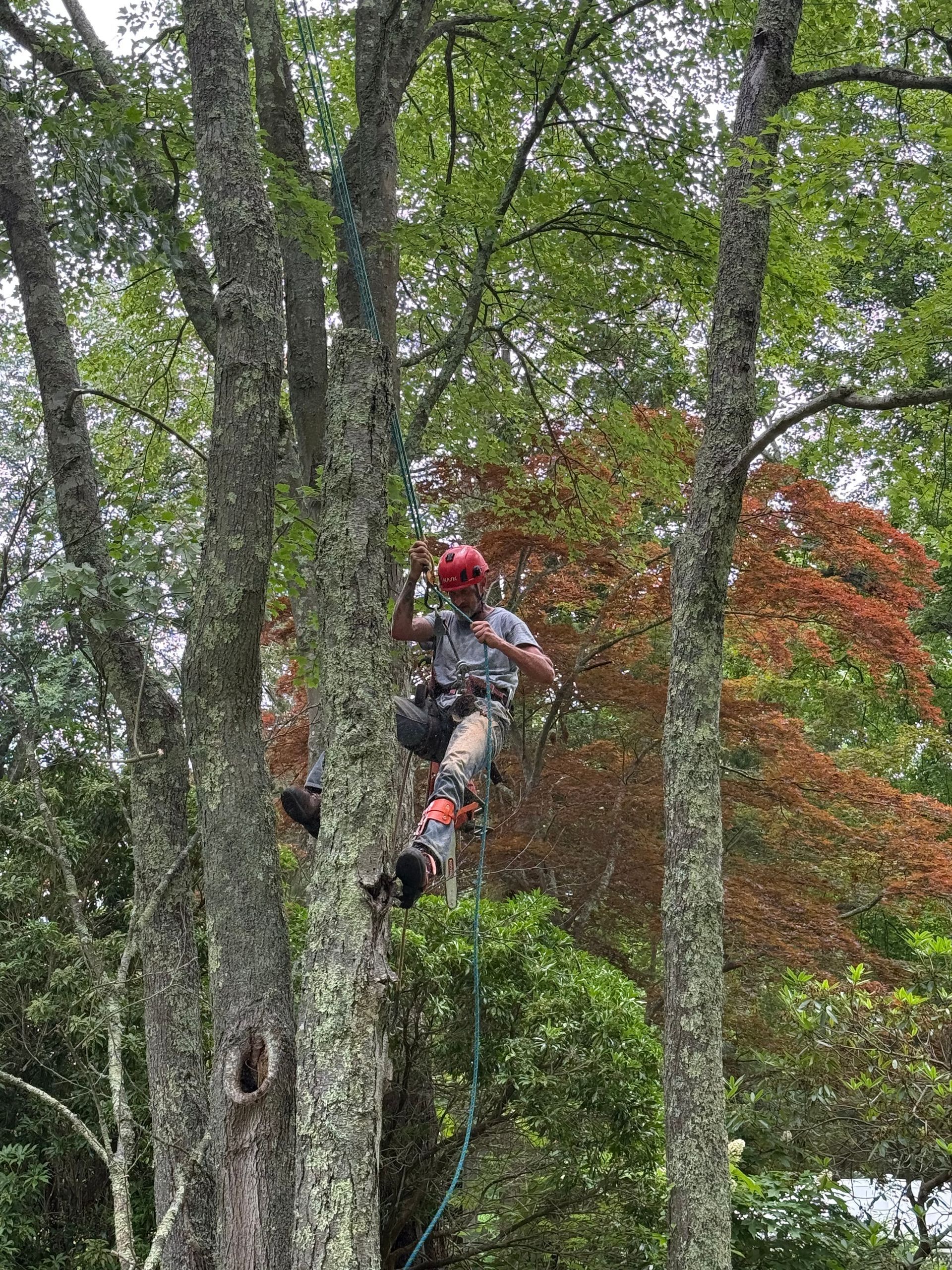
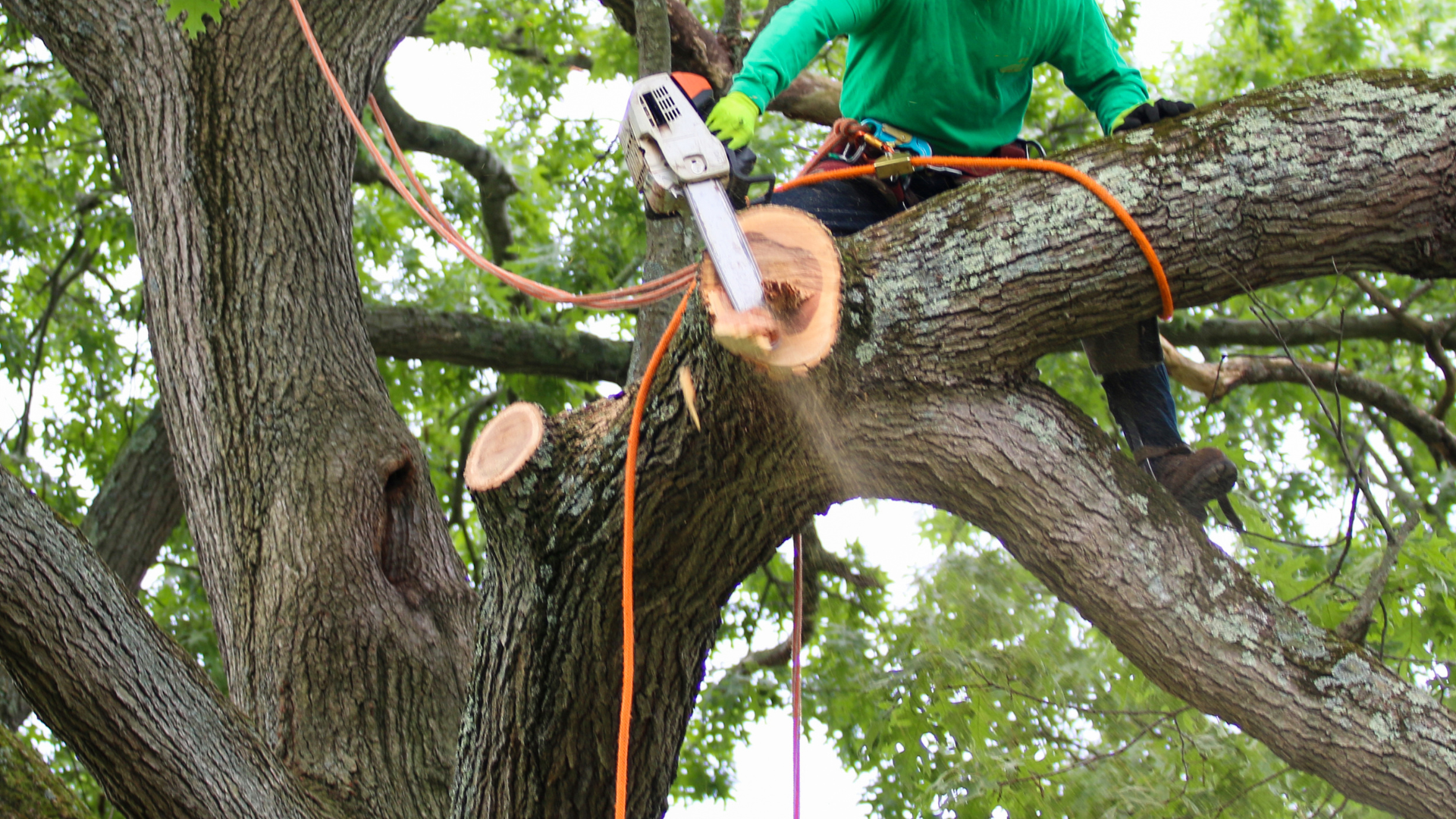
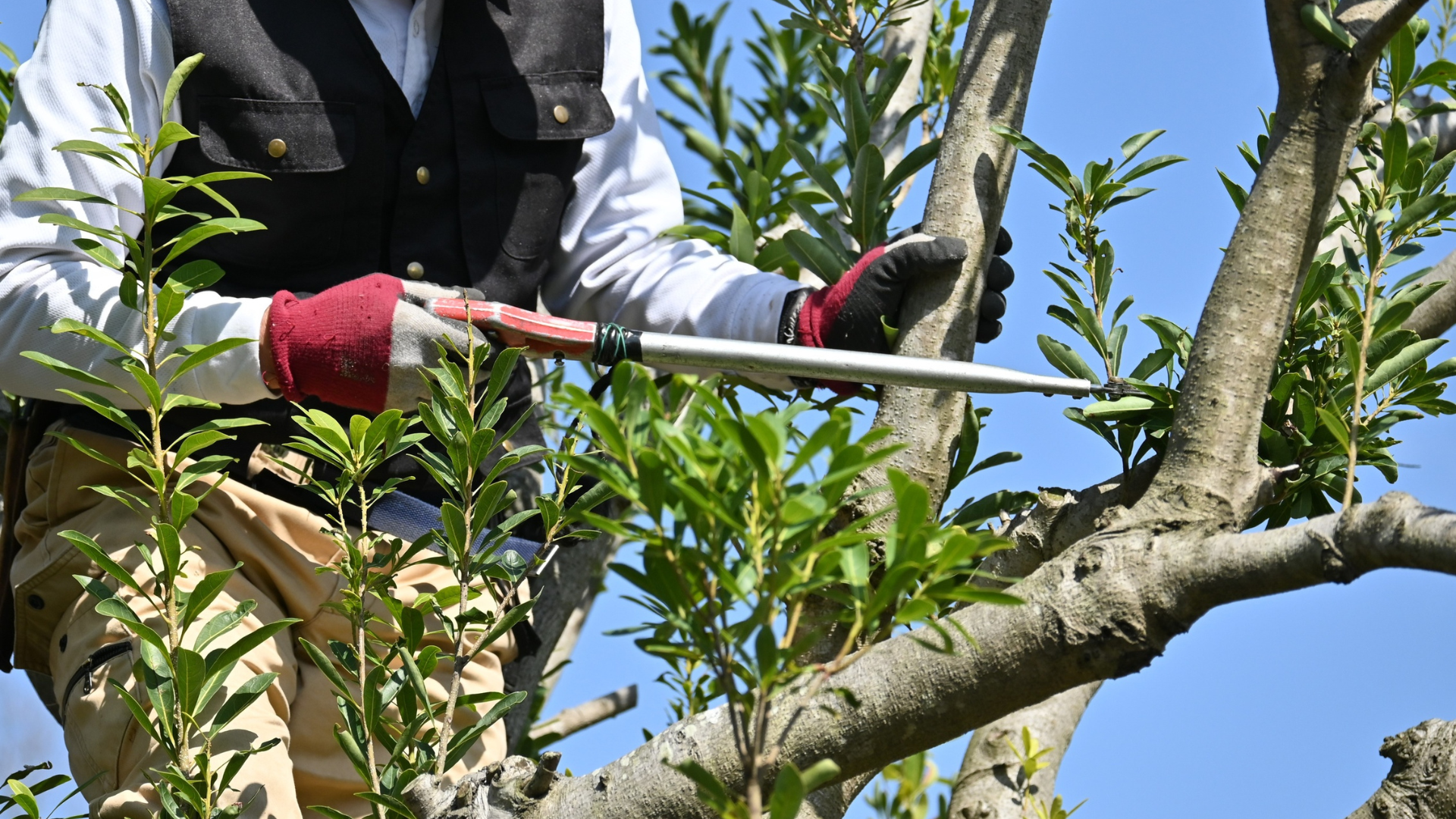
White Oak Tree and Landscaping has been providing tree pruning and care services throughout Clinton, Westbrook, Madison, Guilford, Old Saybrook, Old Lyme, and Branford since 1991. The climbing specialist team performs pruning work from inside the canopy using ropes and rigging, which allows precise cuts at the correct location throughout the crown, including in sections of the tree that are not safely accessible from a bucket truck or from the ground.

Every pruning visit begins with an assessment of the tree's current condition: the extent of dead wood, any structural defects that should be addressed, the clearance requirements of the specific site, and the health indicators that inform how aggressively the tree can be pruned in its current condition. The pruning scope is discussed with the property owner before work begins, and the work is executed to ANSI A300 standards.

Free on-site assessments are available for any property owner who has questions about the condition of their trees or the pruning they may need. The assessment covers what White Oak observes, what they recommend, and what the work would involve. Not every assessment ends in a recommendation to prune. Some trees are in good condition on a schedule that has not yet come due. Others need attention sooner than the property owner expected. The goal is accurate information so the homeowner can make a good decision for the trees and the property they protect.

Share this article

Recent Posts

Orange excavator lifting a tree trunk beside a house in a suburban yard
By Mike James July 7, 2026
Not every blocked water view needs full tree removal. Learn when White Oak recommends canopy thinning, selective removal, or both for CT shoreline properties.
Person in climbing gear scaling a tree beside a wooden deck, secured with ropes and harness.
By Mike James June 30, 2026
A bucket truck cannot reach every tree. White Oak Tree & Landscaping explains why climbing specialists are essential for emergency tree removal in tight CT Shoreline yards where access is the deciding factor.
By Mike James June 17, 2026
Not every tree service in Clinton CT is qualified, insured, or licensed the way Connecticut law requires. White Oak Tree & Landscaping explains exactly what to verify before anyone sets foot in your yard.
A fallen tree blocks a residential street after storm damage, with a damaged house and power lines nearby.
By Mike James June 15, 2026
Some trees on Connecticut shoreline properties are past the point of waiting but haven't failed yet. White Oak Tree & Landscaping explains the warning signs, the window, and why acting now costs less than acting after.
At-risk tree near a home in Clinton CT requiring professional removal
May 27, 2026
Learn the warning signs of at-risk trees Clinton homeowners shouldn't ignore. White Oak Tree & Landscaping offers free hazardous tree removal assessments.