5 Areas Forestry Mulching Can Reopen Before Winter on a Madison Property

Mike James • October 6, 2026

Why This Decision Matters More on CT Shoreline Properties

An overgrown area does not always need to become a lawn, building site, or completely open field. Sometimes the goal is simply to recover a trail, reach a boundary, inspect drainage, or make part of wooded acreage usable again. Forestry mulching can process brush, vines, saplings, and selected woody growth in place while leaving mature trees and defined features intact. Used selectively, it creates access without the hauling and broad soil disturbance associated with a full cut-and-clear approach.


White Oak Tree & Landscaping plans forestry mulching in Madison, CT around the intended use of each reopened area. We identify access limits, trees to preserve, wet areas, utilities, boundaries, and the finish the owner expects. That planning matters because a walking trail, fence corridor, equipment route, and acreage reclamation project require different widths and levels of clearing. These five areas are common places where mulching can provide a practical reset before winter conditions limit visibility or access.


Why Forestry Mulching Works for Selective Reopening

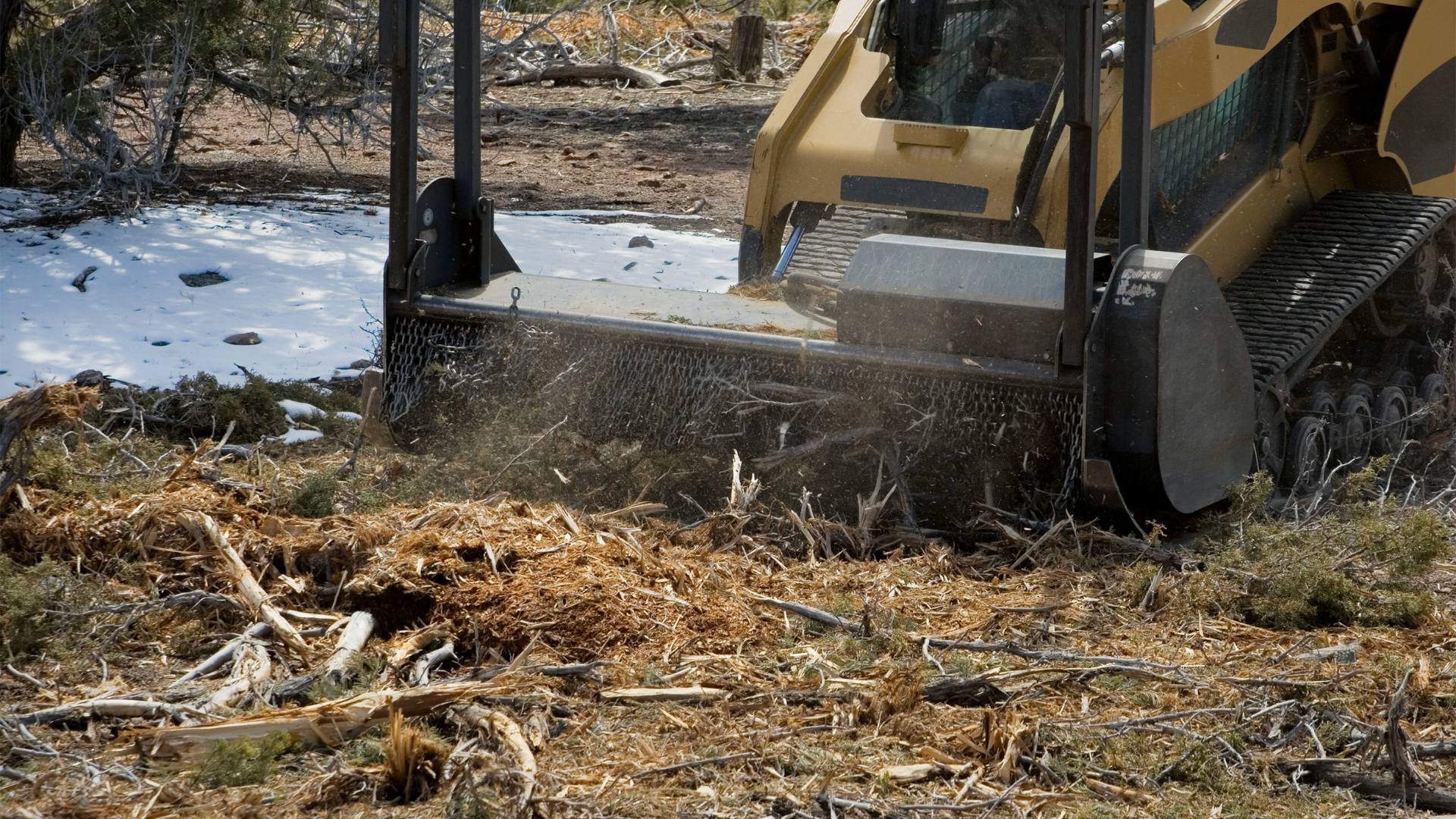
A forestry mulching head cuts and processes woody vegetation directly on the site. Brush and smaller material become a surface layer instead of being stacked into burn piles or loaded onto multiple debris trucks. This approach can reduce hauling and keep protective organic material over disturbed ground. It also allows the operator to work around marked trees and features when the project is properly laid out.


Forestry mulching is not automatically the right method for every area. Tight residential access, large trees, buried debris, steep or saturated ground, utilities, wetlands, and a requirement for bare finished grade can change the plan. The Natural Resources Conservation Service notes that maintaining mulch or plant residue can protect soil aggregates and support water infiltration while reducing exposure to rain and wind erosion. That benefit still depends on responsible operation, an appropriate mulch depth, and a site-specific follow-up plan.

Project Feature Forestry Mulching May Fit Another Method May Be Better
Dense brush and saplings Material can be processed in place Large merchantable or hazardous trees dominate
Limited hauling route Less debris leaves the property Machine cannot safely reach the work zone
Selective woodland opening Marked mature trees can remain Finish requires excavation or precise grading
Erosion-sensitive surface Mulch can cover disturbed soil Wetland rules or saturated soil limit work
Large overgrown area Production can be efficient Area is small enough for hand clearing

1. Old Walking Trails and Woodland Paths

An unused path can disappear beneath vines, saplings, fallen limbs, and brush even when its original route is still visible in places. Trail clearing can reconnect sections without opening the entire woodland. The width should match its purpose, whether the trail is for walking, property inspection, light equipment, or access to a remote feature. Marking the route before mulching prevents the corridor from wandering unnecessarily through stable vegetation.


Useful trail-planning details include:

  • The intended users and required width
  • Wet spots, slopes, roots, walls, and stream crossings
  • Trees or habitat features that should remain
  • Entry, exit, turnaround, and emergency access points
  • Locations where surface stabilization may be needed


Mulching vegetation does not automatically create a durable trail surface. Water can still follow the corridor, and soft areas may require drainage, stone, grade reversals, or other treatment after the route is opened. The U.S. Forest Service trail construction guidance stresses planning drainage features as trail work proceeds rather than clearing far ahead of construction. For a residential Madison path, the same principle means reopening only what can be stabilized and maintained.


2. Property Lines and Fence Corridors

Dense vines and brush can make a known boundary impossible to inspect. Forestry mulching can create a clean corridor for fence planning, survey access, routine maintenance, or neighbor-facing vegetation management. It should begin only after the property line is located with confidence. Clearing vegetation does not legally establish the boundary and should never substitute for a survey when markers are uncertain.


A responsible property line clearing plan identifies:

  • Confirmed pins, monuments, walls, or survey stakes
  • Desired corridor width and fence installation needs
  • Screening or mature trees to retain
  • Wet areas, utilities, and adjoining improvements
  • How regrowth will be managed along the reopened edge


On Madison, Guilford, or Clinton residential lots, an overly wide corridor can remove useful privacy and create a sunlit edge where fast regrowth begins. In Killingworth or North Branford, longer wooded boundaries may make machine efficiency more important, but the same confirmation and preservation steps apply. White Oak can process unwanted growth while retaining appropriate trees and visual screening. The finished corridor should serve a defined purpose and remain manageable after the initial project.


3. Driveway, Utility, and Service Access Routes

Rear acreage may contain a former drive, well route, septic access, drainage lane, or service path that has narrowed over time. Reopening the route can make inspections, repairs, storm cleanup, and future landscape work easier. The required clearance depends on the vehicle or equipment that must pass, including overhead and turning space. A route for a person is not automatically suitable for a truck, mini excavator, or emergency vehicle.


Before mulching, identify:

  • Aboveground and underground utility information
  • Required travel width and overhead clearance
  • Load limits, soft ground, slopes, and drainage crossings
  • Gates, walls, pavement edges, and structures
  • A safe endpoint or turnaround location


The clearing scope should stop where the access problem ends. If the underlying route has ruts, failed drainage, weak shoulders, or unstable material, those issues require separate site work. Forestry mulching opens visibility and removes vegetation but does not rebuild a road base. Defining that limit keeps the owner from expecting vegetation removal to solve structural access problems.


4. Overgrown Acreage and Wooded Lot Edges

Overgrown acreage clearing and wooded lot clearing are strong uses for forestry mulching when dense brush, vines, and saplings make hand work inefficient. The machine processes material as it advances, which can reduce hauling logistics and leave a surface layer over the reopened ground. Selective work can preserve mature shade trees, privacy groups, wind protection, and desirable understory pockets. The area does not have to be stripped to be made usable.


Good acreage planning divides the property into management zones:

  • Areas to open now for access or use
  • Mature woodland to leave undisturbed
  • Invasive patches needing repeated follow-up
  • Wet, steep, rocky, or inaccessible areas
  • Future phases for planting, recreation, or maintenance


This zoning approach also supports realistic budgeting. A high-value access corridor or heavily invaded edge may deserve attention before remote acreage with no immediate use. The UConn Extension invasive plant triage guidance recommends prioritizing sites where intervention can achieve a meaningful outcome with available resources. A phased plan can therefore be more useful than opening every acre at once.


5. Drainage Inspection Routes and Overgrown Wet-Area Edges

Brush often hides swales, culvert ends, shallow ditches, pond edges, and routes where runoff crosses a property. Selective mulching can reopen inspection access and reveal where sediment, woody growth, or fallen debris has interrupted a visible drainage feature. The goal is not to drive heavy equipment through saturated ground or remove all stabilizing vegetation. It is to create enough visibility for the water path to be understood safely.


Look for these clues before defining the work area:

  • Water standing after nearby ground has dried
  • Sediment or leaf lines showing prior flow
  • A pipe or stone channel disappearing into brush
  • Erosion beginning below an unseen outlet
  • Vegetation changes that suggest persistently wet soil


Connecticut DEEP explains that clearing, grading, piping, excavation, and similar activities in or near inland wetlands or watercourses may require review by the municipal wetlands agency. Owners should consult its inland wetlands permitting guidance when the proposed area may be regulated. Forestry mulching can support inspection, but it is not a substitute for drainage design or environmental approval. If repairs are needed, those should be scoped after the route is visible and permissions are clear.


What Should Be Marked and Preserved Before Equipment Starts

Selective work succeeds when the keep areas are as clear as the removal areas. Mature trees, specimen plants, stone walls, survey monuments, habitat features, utilities, septic components, wells, drainage structures, and wetland limits should be identified before operation. Bright marking, a site walk, and a simple map reduce misunderstandings. The operator also needs to know where material may remain and where a cleaner finished surface is required.


Use a pre-work checklist:

  • Mark trees and screening to preserve
  • Confirm boundaries rather than estimating them
  • Locate known utilities, septic areas, wells, and structures
  • Flag wet ground, drainage routes, rocks, wire, and buried debris
  • Define access, equipment staging, and a safe turnaround
  • Agree on mulch depth, stump expectations, and follow-up use


Invasive vegetation needs its own plan because mulching top growth may not eliminate roots, crowns, or seed. UConn’s Oriental bittersweet guidance notes that regrowth may require repeated cutting over several years. Equipment should also be cleaned appropriately when moving between infested and unaffected areas. Follow-up monitoring protects the value of the initial clearing.

Pre-Work Item Decision to Record Risk if Unclear
Trees to retain Species, location, protection zone Unwanted removal or root damage
Boundary Surveyed line or confirmed markers Neighbor conflict or crossed property line
Wet area Limits and required approvals Soil damage or regulatory problem
Utilities and septic Known routes and setbacks Service damage or unsafe operation
Final surface Mulch depth and next use Extra cleanup or failed planting plan

How to Decide Whether Forestry Mulching Fits the Area

Start with the end use. Forestry mulching often fits when an owner wants access, visibility, invasive top-growth reduction, selective woodland opening, or broad brush removal without hauling every piece off-site. Conventional clearing may be better when large trees, stump extraction, construction grading, or a bare finished surface is required. Hand clearing may be more efficient for a small or delicate zone.


Use this decision framework:

  1. Define the area. Mark the exact trail, corridor, acreage, or inspection route.
  2. Define what stays. Identify mature trees, screening, habitat, structures, and protected ground.
  3. Check access and regulation. Confirm equipment entry, soil conditions, boundaries, utilities, and wetlands.
  4. Match the method. Choose mulching, hand work, conventional clearing, or a combined sequence.
  5. Specify the finish. Agree on mulch depth, stumps, debris, and readiness for the next use.
  6. Plan maintenance. Schedule monitoring for invasive regrowth and edge vegetation.


Estimated 2026 Market Context

White Oak publishes forestry mulching as priced by the acre or half-acre based on vegetation density and terrain. Our Madison service guidance also lists residential brush or property-line clearing at $1,500 to $4,000 and construction lot clearing at $3,000 to $10,000 or more. These are planning references, not fixed prices for a forestry mulching project. We provide a free on-site assessment and exact written pricing after reviewing acreage, vegetation, terrain, access, protected areas, tree size, hidden debris, and the intended finish.

White Oak Service Example Published Planning Guidance Main Variables
Forestry mulching Priced by acre or half-acre Density, terrain, access, finish
Brush or property-line clearing $1,500 to $4,000 Area, stems, debris, access
Construction lot clearing $3,000 to $10,000 or more Trees, stumps, acreage, grading needs
Free on-site assessment $0 Site walk and written scope

Compare proposals by scope, not by total alone. One plan may preserve marked trees and leave processed material evenly distributed, while another may exclude cleanup, stump expectations, or a difficult section. Access preparation and follow-up work can also change the complete budget. A written description of the finished area makes the price meaningful.

Reopen Useful Ground Without Clearing More Than Necessary

Forestry mulching can recover trails, property lines, service routes, acreage edges, and drainage inspection areas while preserving the parts of a wooded property that still serve a purpose. White Oak Tree & Landscaping begins by defining the route, marking what stays, and evaluating access, soil, vegetation, and regulatory concerns. We then recommend mulching, another clearing method, or a combined approach based on the actual site. That keeps the project focused on usable results instead of maximum removal.


If you need forestry mulching in Madison, CT, contact White Oak Tree & Landscaping for a free on-site assessment and exact written estimate. Our team has served the Connecticut Shoreline since 1991 and handles projects in Madison, Guilford, Clinton, Killingworth, North Branford, and nearby communities. We will explain what can be reopened, what should remain, how material will be handled, and what follow-up may be needed. You receive a clear scope for turning inaccessible ground into a maintainable part of the property.


Related Services & Pages

Forestry Mulching Madison CT and Land Clearing

Land Clearing Services

Stump Grinding in Madison

Property Maintenance in Madison

Contact White Oak Tree & Landscaping

Share this article

Recent Posts

Yellow backhoe loader with raised bucket on muddy ground near green trees and a building
By Mike James • October 6, 2026
Learn eight signs that overgrowth is hiding drainage, access, boundary, and safety problems on your Madison property before winter. Plan safe work now.
Dense green grass filling the frame, with a few yellow wildflowers scattered throughout.
By Mike James • September 29, 2026
Learn why invasive brush returns after forestry mulching, how Clinton property owners can manage regrowth, and what an effective follow-up plan includes.
Orange compact loader clearing dirt on a dusty construction site
By Mike James • September 29, 2026
Learn how to plan property line clearing in Clinton, confirm boundaries, protect trees and wetlands, choose the right method, and understand likely costs.
Arborist in a red helmet climbing a tree with safety gear in a wooded area
By Mike James • September 22, 2026
Learn why fall is practical for reclaiming overgrown Madison property, choosing a clearing method, managing invasives, and planning the land's next use.
Overhead view of large tree branches around a trunk in a leaf-covered yard near a concrete walkway
By Mike James • September 22, 2026
Learn why mature Madison trees need attention before late-fall storms, which warning signs require trimming, and when removal may be the safer choice.
Front yard with tree debris and mulch, a worker near a house, and a fallen log by the curb.
By Mike James • September 15, 2026
Compare land clearing vs tree removal for overgrown Madison properties, including brush clearing, forestry mulching, lot clearing, and current local costs.
Worker using a chainsaw cuts a large tree branch while secured with ropes.
By Mike James • September 15, 2026
Compare tree removal vs trimming for Madison, CT properties, including pruning, hazardous trees, large removals, risk assessment, and current local costs.
Excavator clearing dry brush in a snowy field near bare trees
By Mike James • September 8, 2026
Learn 9 signs your overgrown Clinton property needs land clearing before fall rain, when forestry mulching fits, and what professional clearing may cost.
Dense green trees under a bright blue sky in a sunny forest clearing
By Mike James • September 1, 2026
Learn when early leaf drop signals tree stress in Connecticut, what yellow or brown leaves mean, and when a professional tree inspection makes sense now.
Hands planting a small sapling with a trowel in a garden bed at sunset
By Mike James • September 1, 2026
Learn why September is one of the best times to plant privacy trees in Connecticut, which species work best, how to space them, and what care matters.
Show More