Why Fall Is a Practical Time to Reclaim Overgrown Property in Madison

Mike James • September 22, 2026

Why This Decision Matters More on CT Shoreline Properties

An overgrown section of property rarely appears all at once. Brush expands beyond an old boundary, vines climb mature trees, volunteer saplings fill an unused corner, and access slowly disappears. By the time the area feels unmanageable, the visible growth may be only part of the job. Roots, stumps, invasive plants, hidden debris, drainage patterns, and the intended use of the land all affect the right clearing plan.


Fall can be a practical window for that reset. Growth begins slowing, portions of the site become easier to see, and homeowners can prepare land for winter access or next year's landscaping, construction, screening, or maintenance. The season does not automatically make every property ready for equipment. Soil conditions, wet areas, slopes, permits, and vegetation type still control the schedule.


For property owners searching for land clearing Madison CT, the best first step is to define what the cleared area should become. That goal determines whether the project calls for brush clearing, forestry mulching, selective tree work, conventional lot clearing, invasive vegetation management, or a combination.


Why Fall Creates a Useful Planning Window

From September into October, vegetation begins revealing more of the site's structure. Property lines, stone walls, drainage swales, mature trees, old fence runs, and terrain changes may become easier to identify as seasonal growth slows and leaf cover thins. Better visibility supports more accurate measurements and a more deliberate clearing boundary.


Connecticut DEEP also advises that plant management or soil disturbance is best conducted during late summer or fall when possible to reduce effects on overwintering pollinators, while recommending that portions of habitat remain undisturbed in any given year. Review Connecticut DEEP's pollinator guidance. That guidance does not mean every clearing job is automatically beneficial or exempt from review. It supports thoughtful timing and selective disturbance.


Fall planning gives homeowners time to coordinate what comes next. A future lawn area may need grading and soil preparation. A property line may need survey confirmation before brush removal. A construction lot may require permitting, stump removal, utility coordination, and erosion controls. A reclaimed woodland edge may need follow-up invasive management rather than immediate planting.


The same logic applies in Guilford, Clinton, and Killingworth, but every parcel behaves differently. Shoreline lots can have coastal or wetland considerations. Inland acreage may have steeper terrain, dense woodland edges, or limited equipment access. A practical season does not replace a property-specific plan.


Start With the Land's Next Use, Not the Machine

Forestry mulching is effective for many overgrown properties, but it should not be the automatic answer simply because a mulching head can enter the site. Conventional clearing, selective brush removal, hand work, tree removal, stump grinding, or phased management may fit better depending on the intended result.


The end use changes the definition of finished. A walking trail needs a different surface and clearance than a future lawn. A construction pad requires different stump and root treatment than a reclaimed woodland edge. A privacy boundary may benefit from selective clearing that preserves desirable trees and shrubs rather than opening the entire area.

Property goal Likely clearing emphasis What must be decided first
Reclaim an overgrown side or back yard Brush clearing or forestry mulching Desired boundary, access, follow-up maintenance
Prepare for lawn or planting Clearing plus stump and soil preparation Grade, drainage, soil condition, final planting plan
Open a property line Selective brush and vine removal Survey or reliable boundary identification
Prepare a building or driveway area Conventional lot clearing and stump removal Approved plan, permits, utilities, final elevations
Control invasive vegetation Species-specific mechanical work and follow-up Identification, regrowth strategy, disposal or treatment
Improve access through acreage Selective clearing or forestry mulching Route, slope, width, drainage crossings, trees to preserve

A clear endpoint also improves pricing. Contractors can estimate the right equipment, crew time, debris handling, and finish standard when the homeowner explains how the space will be used. “Clear everything” often creates unnecessary disturbance and leaves important decisions until equipment is already moving.


What Makes a Property Overgrown Rather Than Simply Natural

Not every wooded or brushy area needs clearing. Natural vegetation can provide privacy, habitat, slope protection, and a transition between maintained yard and woodland. A property becomes functionally overgrown when vegetation interferes with the owner's reasonable use or management goals.


Common examples include an inaccessible side yard, a boundary covered by vines and thorny shrubs, volunteer trees growing into fences, invasive plants overtaking native vegetation, brush blocking a drainage path, or saplings filling an area intended for lawn or recreation. The issue is not that the land looks wild. It is that the current growth conflicts with a defined use or creates a management problem.


An assessment should separate desirable mature trees from low-value brush, invasive vines, damaged saplings, and vegetation growing in the wrong location. That selective approach can preserve shade and privacy while reopening usable ground. It can also reduce the volume of material processed and avoid exposing soil unnecessarily.


Hidden conditions matter. Old wire, dumped material, boulders, stumps, wells, septic components, and uneven grades may be concealed beneath vegetation. Before equipment enters, the work area needs a walk-through, known utilities must be addressed, and questionable objects should be identified rather than discovered by a cutting head.


How Forestry Mulching Reclaims Dense Growth

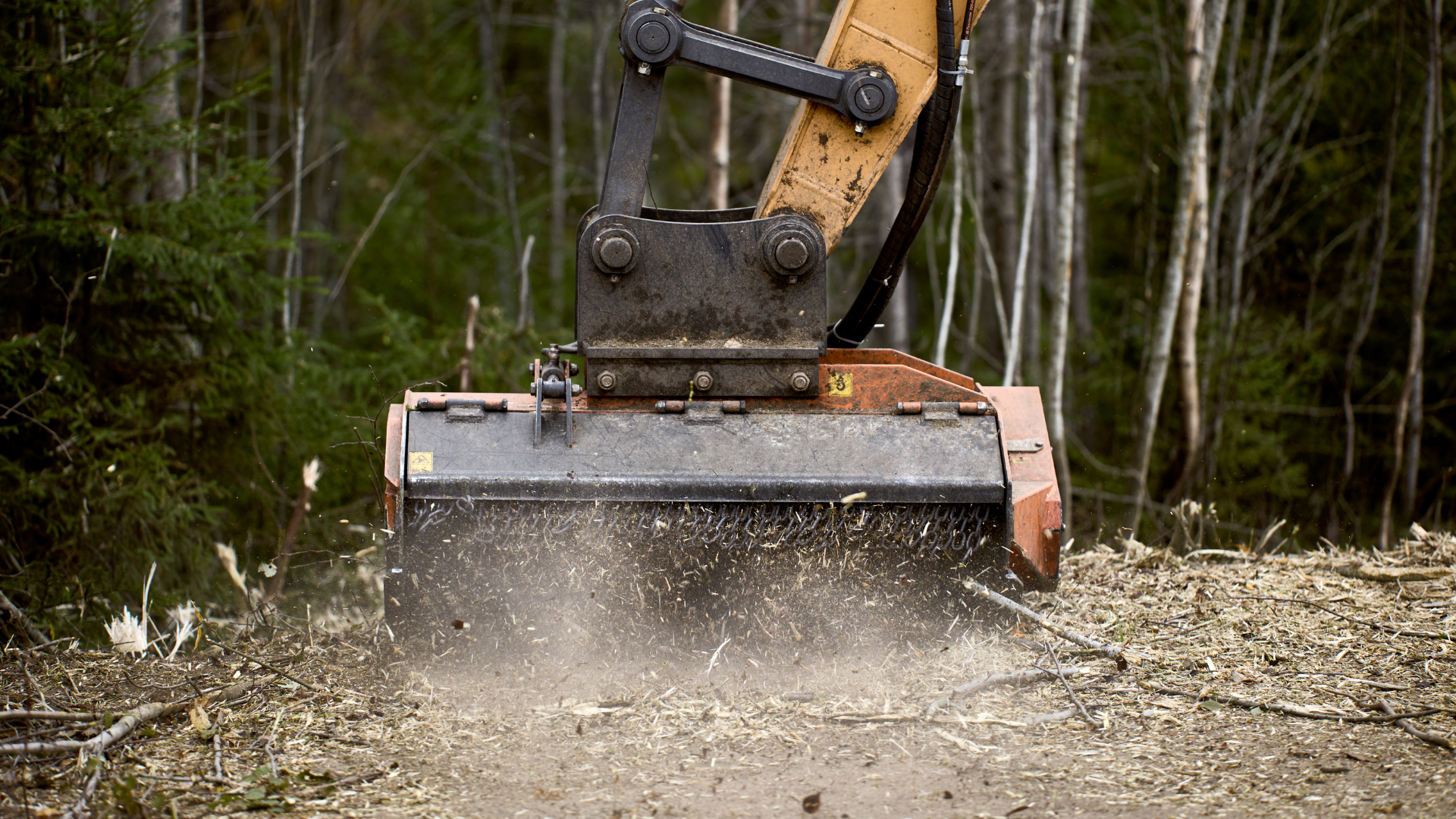
Forestry mulching uses a machine-mounted cutting head to grind brush, saplings, vines, and other woody growth into mulch on site. Instead of cutting material into piles and hauling every load away, the process converts much of the vegetation into a surface layer over the treated ground.


For suitable Madison properties, this can simplify logistics. Fewer debris trucks may be needed, and the machine can process dense growth in a continuous pass. It is particularly useful for larger areas where conventional cutting and hauling would create substantial material volume.


The remaining mulch is not the same as a finished lawn or a construction-ready grade. Stumps or root systems may remain below the surface depending on the scope. The area can also need follow-up work if the goal includes seeding, planting, building, driving, or precise grading. Forestry mulching is a clearing method, not every subsequent phase of site development.


Ground cover can be valuable after disturbance. The USDA Natural Resources Conservation Service notes that adequate mulch cover helps protect soil from erosion and runoff, while application and material must suit the site's objective. Read the NRCS mulching conservation standard. This general principle supports leaving processed material where appropriate, but actual depth, distribution, slope, drainage, and next use still need evaluation.


White Oak provides forestry mulching in Madison and also uses conventional methods when a site or final use calls for them. The recommendation should fit the land, not force every job into one process.


When Conventional Clearing or Selective Work Fits Better

Traditional clearing is often the stronger choice when mature trees must be removed individually, stumps need to come out or be ground below a specified grade, logs require handling, or the site must be prepared for construction. It provides more control over material separation and the final condition of the ground.


Selective hand or machine work may be better on tight residential lots, near retained landscaping, along stone walls, beside structures, or where a broad mulching pass would disturb vegetation the owner wants to keep. A small overgrown border does not always justify large equipment.


Conventional or combined methods often make sense when the job includes:

  • Large-tree removal requiring climbing or controlled rigging
  • Construction access, foundation work, or utility installation
  • Stump grinding to a defined depth
  • Tight work near fences, structures, septic areas, or retained plantings
  • Material that must be removed rather than left as mulch
  • Detailed grading or a finished lawn surface
  • Selective preservation of mature trees and native understory


White Oak handles tree removal, stump grinding, brush clearing, lot clearing, and property restoration within the same broader scope. That allows a Madison project to use different methods in different zones rather than applying one technique across the entire parcel.


Invasive Vegetation Needs More Than One Clearing Pass

Invasive vegetation removal begins with correct identification. Connecticut's official field guide includes a management calendar covering mechanical methods such as cutting, pulling, and mowing for listed terrestrial invasive plants. See the Connecticut Agricultural Experiment Station field guide.


Mechanical clearing can remove the visible mass and restore access, but many established invasive plants can regrow from roots, rhizomes, crowns, fragments, or seed. Oriental bittersweet may return from remaining root systems. Japanese knotweed requires careful handling because fragments can spread. Autumn olive, multiflora rose, barberry, and other woody plants may need repeated control.


That means the project plan should include what happens after the first pass. Follow-up may involve repeated cutting, targeted removal, monitoring, revegetation, or coordination with a properly licensed herbicide applicator. White Oak provides mechanical invasive vegetation management and can coordinate a broader program when regrowth requires more than clearing alone.


The cleared site's next vegetation matters too. Leaving disturbed ground without a maintenance plan can give aggressive species another opening. Preserving desirable canopy, protecting native plants, and establishing manageable cover can make reclamation more durable.


A clean-looking result on day one is not proof that an invasive infestation is resolved. Homeowners should receive an honest explanation of what is likely to return, how it should be monitored, and whether multiple seasons of work are realistic.


Protect Soil, Drainage, and Regulated Areas

Clearing changes how rain reaches and moves across a property. Vegetation intercepts rainfall, roots hold soil, and surface cover slows runoff. Removing growth without considering slope and discharge can expose bare soil, fill low areas with sediment, or send water toward a neighboring property, wetland, driveway, or structure.


Responsible planning identifies steep slopes, drainage paths, wet areas, watercourses, and areas where heavy equipment could compact soil. It also determines where mulch can remain, where debris must be removed, and what stabilization or planting should follow.


Connecticut DEEP states that clearing, grading, excavating, filling, and similar work in or near inland wetlands or watercourses may require review and approval from the local wetlands agency. Review Connecticut's municipal wetlands permitting guidance. Madison has its own Inland Wetlands and Watercourses Agency, so property owners should confirm requirements before disturbance begins.


Permit review is not determined by project name alone. Calling a job “brush clearing” does not make regulated-area concerns disappear. Location, extent, equipment, soil disturbance, and the relationship to wetlands or watercourses all matter. White Oak evaluates the property and advises when the proposed scope needs local confirmation before scheduling.


What Property Reclamation May Cost


Estimated 2026 Market Context

White Oak publishes current planning ranges for Connecticut Shoreline land clearing. These are our general ranges, not fixed quotes for every Madison property. Vegetation density, acreage, terrain, access, tree size, stump requirements, permits, debris strategy, and the desired finish all affect exact pricing.

White Oak service Published planning range Important qualifier
Residential brush or property-line clearing $1,500–$4,000 Typical for accessible overgrown yards and boundary work
Lot clearing for construction $3,000–$10,000+ Acreage, tree density, stumps, access, and construction coordination matter
Forestry mulching Priced by acre or half-acre Density and terrain determine production and equipment time
Invasive vegetation management Site-specific Species, infestation extent, and repeat cycles affect scope
White Oak on-site estimate Free Includes property review and exact written pricing

The most reliable estimate comes after walking the site and defining the finish. A half-acre of soft brush on level, accessible ground is not equivalent to the same area containing mature trees, stone, steep slopes, wet soil, and invasive vines. We do not give land-clearing phone estimates because those variables need to be seen.


Phasing can help on larger properties. A first phase might restore access and remove urgent hazards. Later phases can address remaining acreage, stump work, invasive regrowth, grading, or replanting. The written plan should make each phase usable rather than leaving disconnected cleared patches.

Reclaim the Property With a Plan for What Comes Next

Overgrown property clearing is most successful when it creates a manageable next condition. That may be an open woodland edge, a restored boundary, a future lawn, a building site, a trail, or space for new screening. The clearing method should support that goal while protecting the soil, drainage, retained trees, and regulated areas around it.


White Oak Tree & Landscaping has served the Connecticut Shoreline since 1991. We provide land clearing, forestry mulching, brush removal, invasive vegetation management, tree removal, stump grinding, and follow-up landscape work. Our team is licensed and insured under HIC#0706616, and every Madison project begins with a free on-site assessment and written estimate.


To discuss an overgrown area, call (203) 429-5660 or request a free estimate. We will walk the property, define the clearing boundary, explain the recommended method, and price the actual site rather than guessing from a phone description.


Related Services & Pages

Land Clearing and Forestry Mulching in Madison

Tree Removal in Madison

Stump Grinding in Madison

Property Maintenance and Landscape Renovation in Madison

Forestry Mulching vs. Traditional Land Clearing

White Oak Tree & Landscaping Service Area

Share this article

Recent Posts

Excavator blade scraping dirt and dust on a forest trail
By Mike James • October 6, 2026
See five areas forestry mulching can reopen on Madison properties, how it works, what should remain, and how to plan the work safely before winter arrives.
Yellow backhoe loader with raised bucket on muddy ground near green trees and a building
By Mike James • October 6, 2026
Learn eight signs that overgrowth is hiding drainage, access, boundary, and safety problems on your Madison property before winter. Plan safe work now.
Dense green grass filling the frame, with a few yellow wildflowers scattered throughout.
By Mike James • September 29, 2026
Learn why invasive brush returns after forestry mulching, how Clinton property owners can manage regrowth, and what an effective follow-up plan includes.
Orange compact loader clearing dirt on a dusty construction site
By Mike James • September 29, 2026
Learn how to plan property line clearing in Clinton, confirm boundaries, protect trees and wetlands, choose the right method, and understand likely costs.
Overhead view of large tree branches around a trunk in a leaf-covered yard near a concrete walkway
By Mike James • September 22, 2026
Learn why mature Madison trees need attention before late-fall storms, which warning signs require trimming, and when removal may be the safer choice.
Front yard with tree debris and mulch, a worker near a house, and a fallen log by the curb.
By Mike James • September 15, 2026
Compare land clearing vs tree removal for overgrown Madison properties, including brush clearing, forestry mulching, lot clearing, and current local costs.
Worker using a chainsaw cuts a large tree branch while secured with ropes.
By Mike James • September 15, 2026
Compare tree removal vs trimming for Madison, CT properties, including pruning, hazardous trees, large removals, risk assessment, and current local costs.
Excavator clearing dry brush in a snowy field near bare trees
By Mike James • September 8, 2026
Learn 9 signs your overgrown Clinton property needs land clearing before fall rain, when forestry mulching fits, and what professional clearing may cost.
Dense green trees under a bright blue sky in a sunny forest clearing
By Mike James • September 1, 2026
Learn when early leaf drop signals tree stress in Connecticut, what yellow or brown leaves mean, and when a professional tree inspection makes sense now.
Hands planting a small sapling with a trowel in a garden bed at sunset
By Mike James • September 1, 2026
Learn why September is one of the best times to plant privacy trees in Connecticut, which species work best, how to space them, and what care matters.
Show More