
Why Are Mushrooms Growing at the Base of My Tree?

Mike James • November 24, 2026

Why This Decision Matters More on CT Shoreline Properties

Mushrooms growing at the base of a tree may be feeding on decaying material in the soil, buried wood, or parts of the tree itself. Their location and type matter, so mushrooms alone do not prove the tree is dangerous. Fungal growth attached to the trunk or root flare deserves particular attention. At White Oak Tree & Landscaping, we consider that growth alongside the tree’s structure and what could be affected if it failed.


For homeowners in Guilford, Madison, and Clinton, the useful question is whether the growth is an isolated observation or part of a larger decline. A healthy-looking canopy does not rule out internal decay. At the same time, a few mushrooms in nearby mulch are not a reason to remove a mature tree automatically. A professional assessment helps separate those situations without relying on a photograph alone.


Where the Mushrooms Grow Matters

Mushrooms in mulch may be associated with decomposing landscape material rather than a living root system. Growth emerging directly from the trunk, buttress roots, or a damaged root flare raises a different question. A shelf-like conk attached to wood is worth documenting carefully from a safe distance. Do not cut into the trunk or remove bark to look for an answer.


UC Integrated Pest Management guidance on wood-decay fungi explains that fungal fruiting structures can indicate decay within woody tissue. The visible mushroom is only part of the organism and does not reveal the full extent of affected wood. Identification may help an assessment, but it does not replace evaluating tree structure. We look beyond the fruiting body before discussing pruning, monitoring, or removal.


Which Other Signs Increase Concern?

A cavity, fresh crack, dead branches, unusual lean, or movement around the roots can change the urgency. Multiple changes together are more concerning than one small patch of mushrooms in a planting bed. Note whether a tree has recently shifted or whether soil around its base has lifted. Keep away from a tree that appears unstable rather than approaching to gather more evidence.


Our article on saturated ground and leaning trees explains why site conditions also deserve attention. Wet soil, wind exposure, and existing structural weakness can interact in ways that a simple mushroom identification cannot resolve. The UConn tree-risk resource provides broader context for considering trees and nearby targets. A tree over an occupied entrance presents a different exposure than a similar tree in an unused corner.

Observation What it does and does not tell you Response
Mushrooms in mulch away from trunk May involve decomposing landscape material Record location and watch for changes
Conk attached to trunk or root flare May indicate decay in woody tissue Arrange professional assessment
Fungus with cracks or dead major limbs Several potential weakness indicators Request timely evaluation
New lean or root-plate movement Possible instability Keep clear and seek urgent help

What to Record Before Calling Us

Take a photograph showing the whole tree and another showing the growth if you can do so without entering a hazardous area. Record whether it is attached to wood or emerging from nearby soil. Mention recent trenching, construction, storm damage, or changes to the soil around the roots. These details help establish what needs closer investigation without asking you to diagnose decay.


Avoid scraping out cavities, applying household chemicals, or treating the mushroom as the entire problem. Removing a fruiting body does not restore wood already affected by decay. Do not dig around major roots to expose hidden growth. If a fresh crack or sudden lean appears, restrict access and request prompt professional help.


How We Decide Whether the Tree Can Remain

The next step depends on structural condition, the location of decay, tree size, and the consequences of failure. Some situations justify monitoring and an agreed inspection schedule. Others may benefit from carefully selected pruning when the tree can tolerate it. Significant instability or an unacceptable risk near people and buildings may warrant removal.


Our tree removal services are one option when assessment supports that scope, not the default response to every fungus. If specialized diagnostic work or a formal tree-risk assessment is needed, we can discuss the appropriate next step. No simple rule based on the number of mushrooms establishes structural safety. Ask what findings support the recommendation and whether access restrictions are needed while work is arranged.

Assessment finding Possible management direction Follow-through
No significant structural concern identified Retain and monitor Agree on changes that require another visit
Manageable branch-related weakness Selective pruning when appropriate Avoid excessive canopy removal
Uncertain internal condition Further qualified evaluation Do not assume appearance proves safety
Unacceptable failure risk Removal may be appropriate Plan access, work zone, and cleanup

What Should You Budget?

As a broad national benchmark, HomeGuide lists average tree removal at about $400 to $1,200. That figure is not a price for a mushroom inspection or a quote for your property. A large, compromised tree near a home can require substantially more planning and equipment than a straightforward removal. We discuss the actual tree and site before defining the work.


Assessment, pruning, removal, and stump work are different services and should be distinguished in the proposal. Ask whether any specialized evaluation is included or arranged separately. Access, tree condition, nearby structures, debris handling, and stump grinding can all affect the total. A low removal figure is not useful if it leaves out the work needed to protect the property.

Work or budget factor Planning context What changes the scope
Tree removal if warranted $400 to $1,200 national average reference Size, condition, access, and targets
Tree assessment Scope-specific pricing Basic consultation versus specialized evaluation
Selective pruning Quoted for the tree and work Branch condition and safe access
Stump grinding or debris options Confirm separately Inclusion varies with the written scope

Get a Clearer Picture of the Tree’s Condition

If you have noticed mushrooms at the base of a tree, we can help evaluate the concern in context. White Oak Tree & Landscaping serves Guilford, Madison, and Clinton. We discuss the visible findings and the management options they support. Contact us to arrange an assessment of your tree-related concerns.


Tell us where the growth appears and whether anything else has changed. Mention nearby buildings, driveways, paths, or play areas. Stay clear if the tree has shifted or a major defect is developing. A careful assessment gives you a better basis for deciding what to do next.


Helpful Services and Related Reading

Share this article

Recent Posts

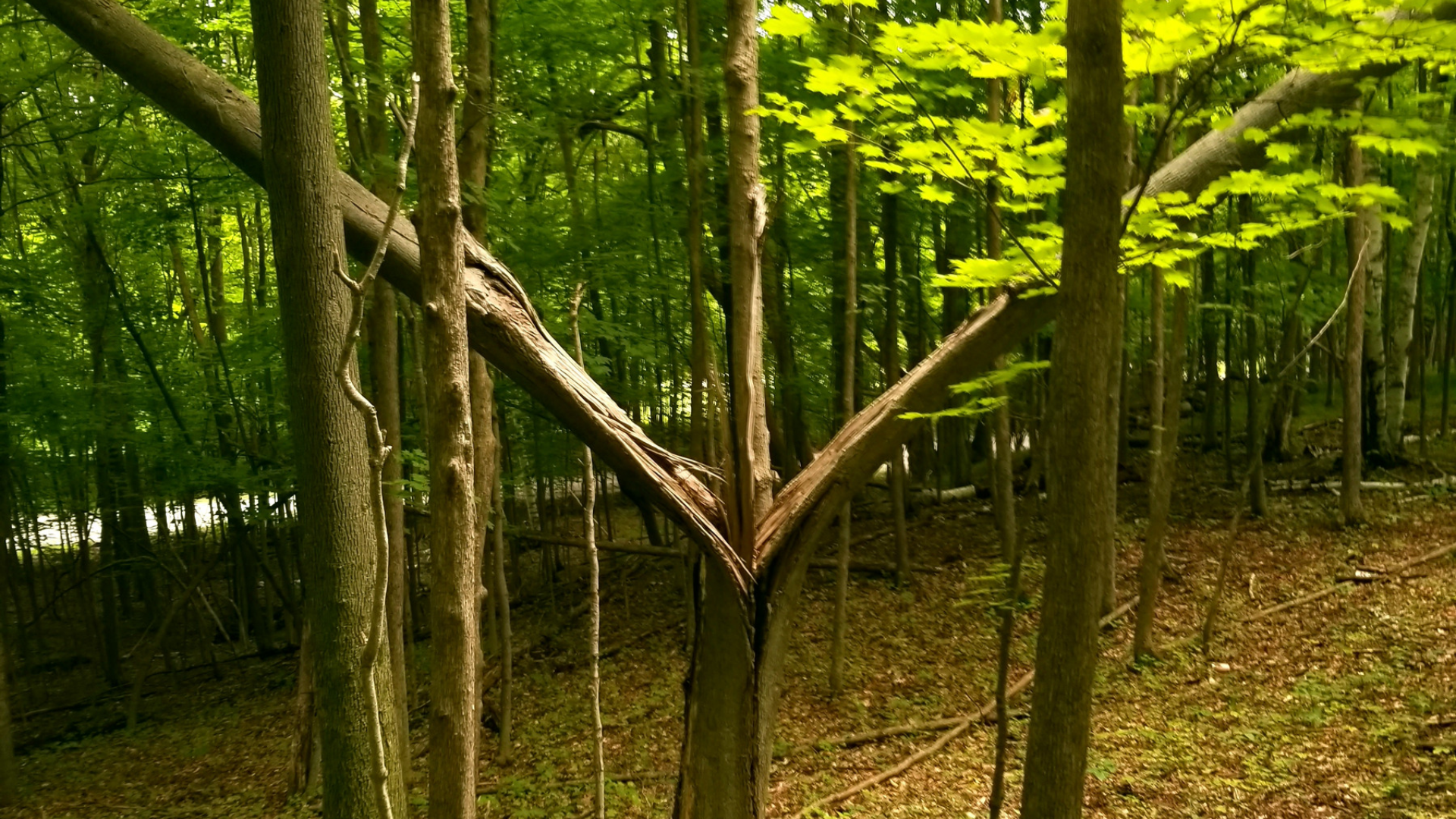
A forest clearing with a tree whose trunk splits into two long, upward-reaching branches among dense green trees.
By Mike James • November 24, 2026
Find out how a natural tree fork differs from an active split and when White Oak can help assess a potentially hazardous tree.
Orange excavator lifting a large tree log in a fenced yard with a house in the background
By Mike James • November 10, 2026
Learn how crews plan large-tree removal in tight backyards, protect nearby structures, choose suitable methods, and prepare Guilford homes for work.
Yellow excavator clearing brush beside a skid steer in a wooded area during land clearing
By Mike James • November 10, 2026
Plan land clearing with a practical checklist for boundaries, trees, utilities, access, permits, mulch, and the finish of your Madison property.

Glowing carved jack-o'-lanterns lined up on grass at night in a park, lit orange under trees.
By Mike James • October 29, 2026
Learn five hazards around tree stumps, how to protect visitors, and when Clinton homeowners should consider stump grinding, cleanup, or site restoration.
Halloween pumpkins hanging in a tree, each carved with a different face, in a wooded area
By Mike James • October 29, 2026
Protect trees this Halloween with tips on safe attachments, branch loads, lighting, and pruning, and when Madison homeowners should request expert help.
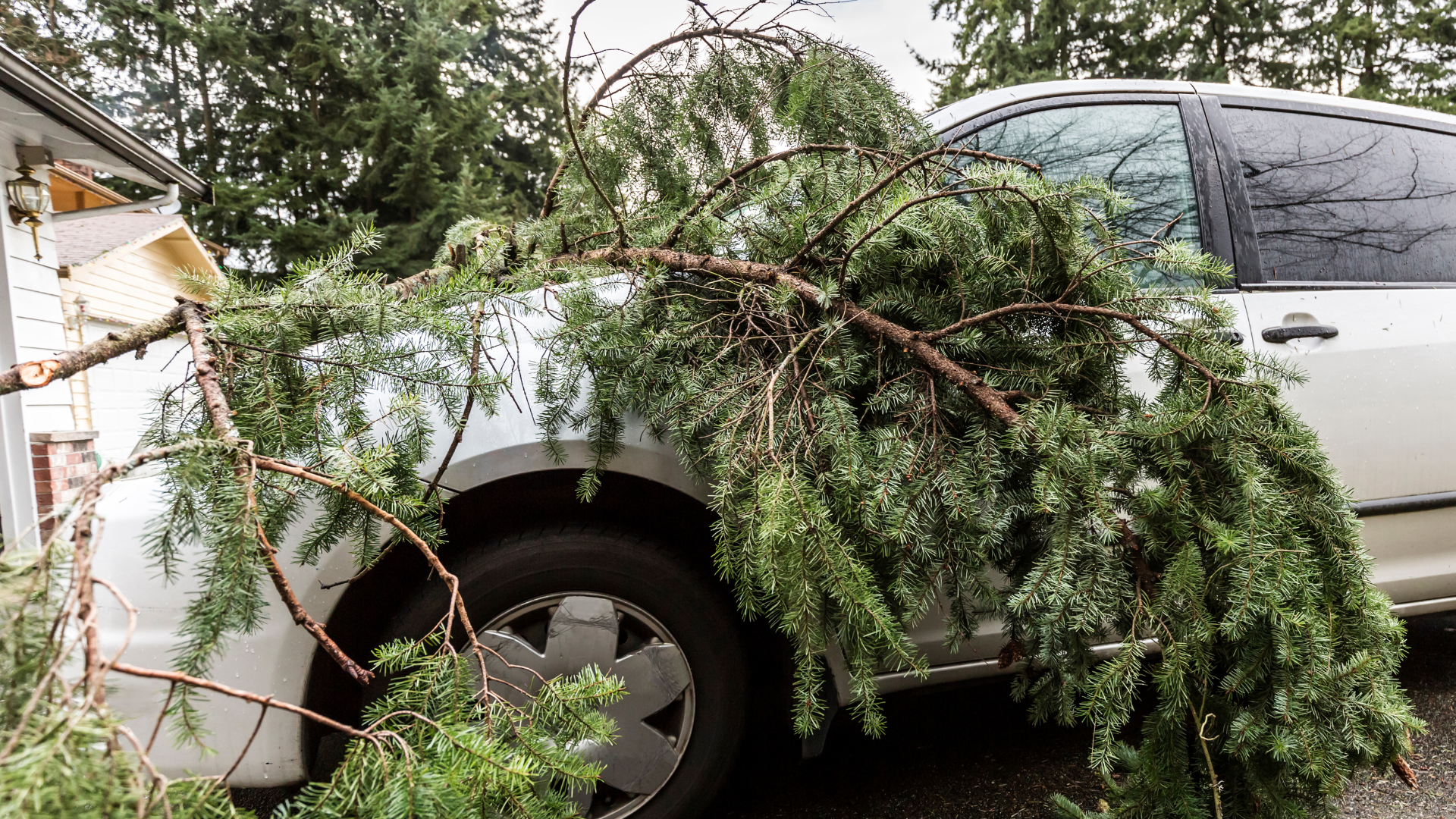
Fallen tree branches drape over a silver SUV parked beside a white house.
By Mike James • October 20, 2026
Learn how fallen branches and brush obstruct runoff, worsen ponding, and limit access, plus when Madison homeowners should arrange storm debris removal.
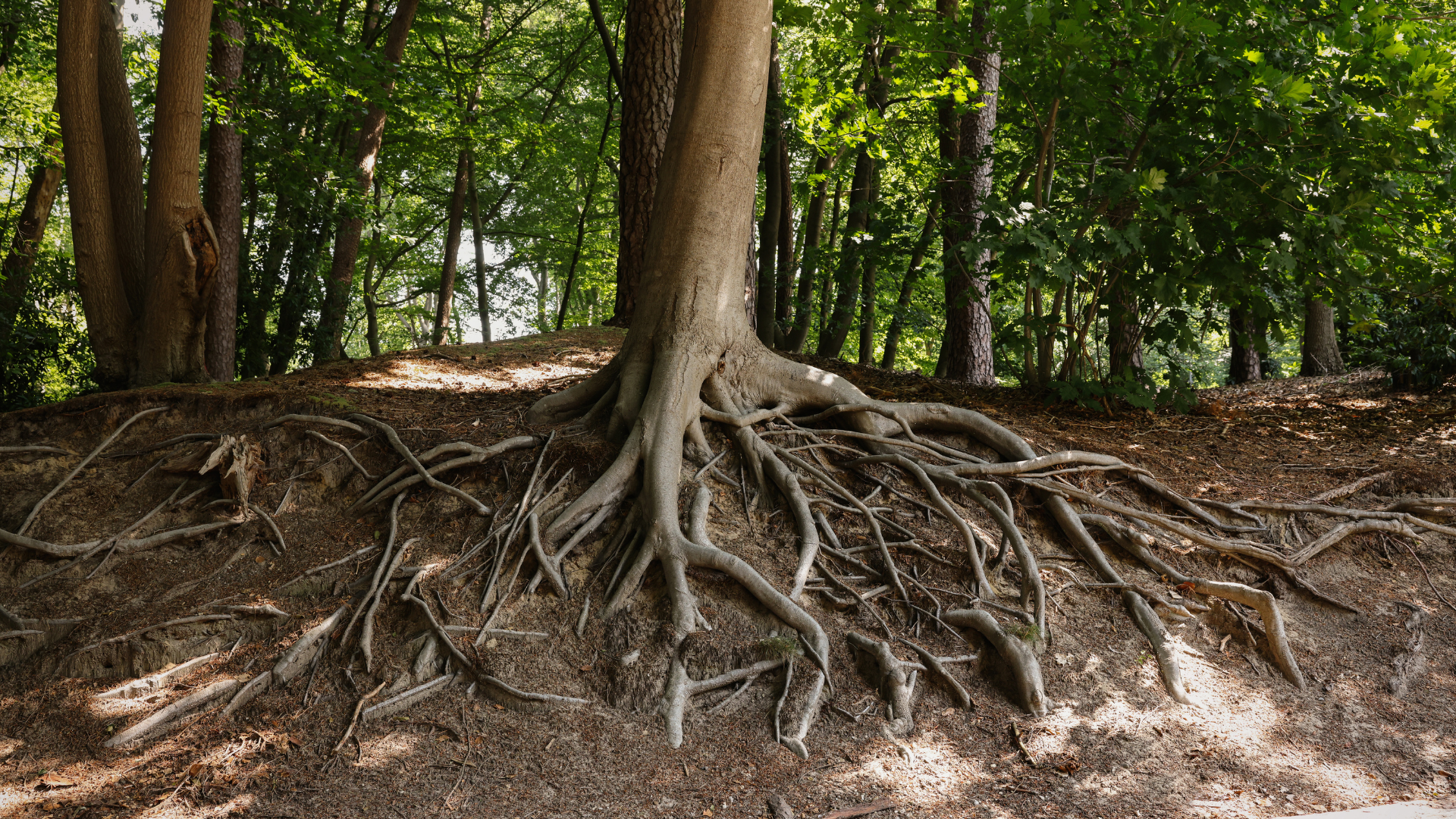
Large tree roots exposed on a dirt slope in a wooded forest area
By Mike James • October 20, 2026
Learn why saturated soil makes leaning trees less stable, which warning signs matter, and when Madison homeowners should request a professional assessment.
By Mike James • October 13, 2026
When Overgrown Land Becomes a Winter Access Problem on Madison Properties
By Mike James • October 13, 2026
What Dense Brush Can Hide Before Snow and Ice Arrive on a Madison Property
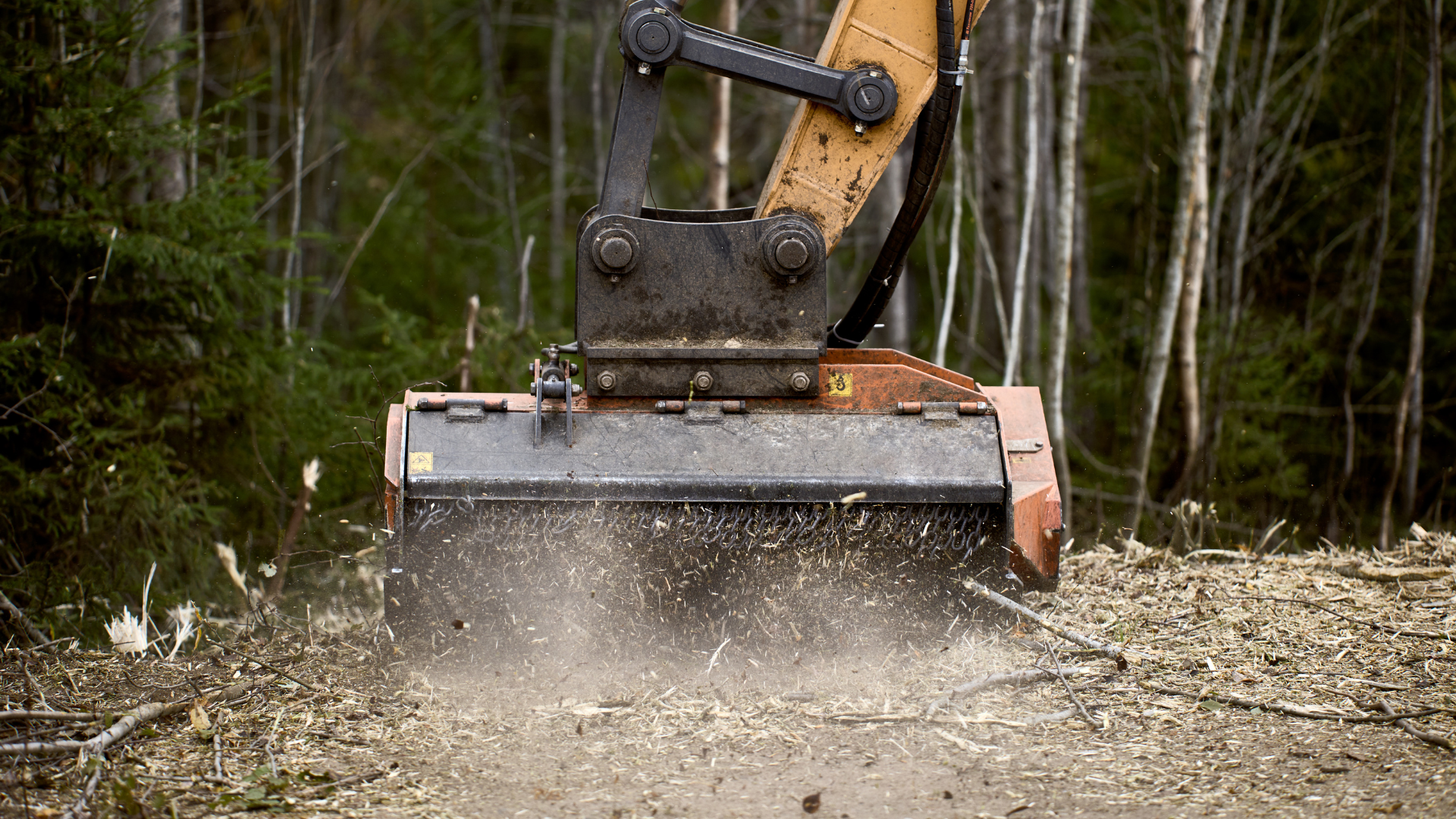
Excavator blade scraping dirt and dust on a forest trail
By Mike James • October 6, 2026
See five areas forestry mulching can reopen on Madison properties, how it works, what should remain, and how to plan the work safely before winter arrives.
Show More