How Do Tree Crews Remove a Large Tree in a Tight Backyard?

Mike James • November 10, 2026

Why This Decision Matters More on CT Shoreline Properties

When a tree cannot safely fall in one piece, a qualified crew may dismantle it in sections using climbing, controlled rigging, suitable equipment, or a combination. The choice depends on the tree's condition and the available space, not just whether a crane fits through the gate. Some trees are too compromised to climb or use for supporting removal loads. That makes the assessment essential before anyone promises a particular method.


At White Oak Tree & Landscaping, we plan difficult removals around the tree and the surrounding property. We help Guilford homeowners with tight-access situations and also work in Madison and Clinton. This guide explains what to expect during a planned residential job, from the first visit through debris handling. It is a homeowner's process guide, rather than instructions for attempting tree work yourself.


The Assessment Starts With the Tree, Not the Gate

Access matters, but the tree's ability to support the proposed work comes first. A tree can be green and still have defects that affect the removal plan. Deadwood, trunk cracks, decay, root movement, and storm damage require attention before a crew decides how to reach the canopy. The assessment also considers where branches or trunk sections could move and what lies beneath them.


Our tree removal services begin with an on-site assessment and written scope. Tell us about changes you have noticed, including a new lean, recent limb loss, construction near the roots, or earlier damage. A photograph can help explain your concern but cannot replace examining the tree and surroundings. If the assessment indicates that limited tree work or another response is appropriate, removal should not be assumed simply because access is difficult.


Map the Space Around the Tree and the Work Route

A small backyard can contain several different constraints. Roofs, sheds, fences, planted areas, and neighboring property may limit how material is lowered and carried out. The work plan needs both a controlled removal area and a practical route for debris.

Property feature What the crew needs to assess What homeowners can provide
House and other buildings Canopy position and space around structures Access details and known fragile features
Fences and gates Usable openings and route limitations Gate arrangements and ownership information
Driveway and hardscape Staging and equipment suitability Known defects or load-sensitive areas
Landscaping Retained plants and available working room Priorities for features to protect
Wells, septic, and buried services Areas to avoid or investigate before equipment use Available plans and private-line information
Neighboring property Whether any access or overhang affects the plan Boundary records and any agreed permissions
Overhead lines Electrical exposure and required coordination Known line locations without approaching them

The removal area is not necessarily directly below every branch. The crew needs to consider where material can be handled after it comes down. A route that works for workers on foot may still be unsuitable for moving large logs or machinery.


Our Guilford tree removal services address these site-specific constraints. The same planning applies in Madison and Clinton, but the chosen arrangement changes by property. Avoid removing a fence or opening a neighbor's access route before the crew confirms that it is useful and authorized.


Choose Climbing, Rigging, or Equipment Around the Findings

Tree removal in tight spaces is not a contest between climbing and machinery. Each method has requirements and limitations. The appropriate plan may use more than one approach as the tree and site permit.


When Climbing-Based Removal May Fit

Where the tree and available support arrangements are suitable, an experienced climber can access parts of the canopy without driving a large vehicle beside the trunk. Material can then be handled in controlled sections within the work plan. This can be valuable where a side yard or garden limits vehicle access. It does not mean every tight-backyard tree is safe to climb.


What Controlled Rigging Means for a Homeowner

Rigging uses professional systems to help control the movement of material during dismantling. The crew selects an arrangement around the tree's condition, the forces involved, and the available handling space. A rope visible from the ground is only one part of that system. Homeowners should not attempt to help by pulling lines, handling equipment, or entering the work zone.


When Equipment May Still Be Necessary

A crane, lift, or other equipment may be appropriate when the tree cannot safely support a climbing-based plan or when the site favors another method. Equipment also needs suitable setup conditions, working clearance, and access. If a particular machine cannot be positioned safely, the crew must reassess rather than force the same plan. No responsible promise of crane-free removal can be made solely from the width of a gate.


The Tree Care Industry Association's guidance on difficult removals emphasizes gathering information and developing a feasible plan understood by the team. That planning principle is more relevant to a homeowner than a particular rigging technique. Ask how the proposed approach responds to your tree and obstacles, without expecting to choose the technical system yourself.


How Sectional Removal Changes the Job

Instead of relying on a full-tree landing space, sectional removal reduces the tree through a planned sequence of smaller portions. The method of handling those portions depends on the approved work plan and available room. Sectional removal is controlled professional work, not a guarantee that every piece can be lowered in the same way. The crew must account for changing conditions as the canopy and trunk are reduced.


From the house, the pace may look slower than a removal in an open field. That can reflect the need to manage each stage around a roof, fence, or restricted handling area. Do not assume that a pause means the crew needs assistance from someone in the yard. Allow the team to complete its communication and handling sequence before approaching for an update.


What Changes When a Tree Is Dead, Cracked, or Leaning

A compromised tree may require a different access method, work sequence, or schedule from a sound tree of similar size. Existing damage can affect whether the tree can support a climber or the loads involved in dismantling. A difficult location does not make an unsafe tree suitable for climbing. Fresh movement or changing damage may also turn a planned visit into a situation needing prompt reassessment.


Our article on leaning trees and saturated ground explains why the condition of the root area matters alongside the trunk. Our related guide to climbing specialists in tree emergencies addresses a different situation from an ordinary scheduled removal. If the tree changes after the estimate, contact us rather than wait silently for the original date. Keep people away from hanging limbs, fresh splits, or an actively changing lean while help is arranged.


How the Crew Plans to Protect the Surrounding Property

Protection begins with choosing the work area and method, not simply laying something over the lawn. The crew considers access, staging, handling routes, and features that need to remain outside routine activity. Surface protection may be useful where appropriate, but it does not make every driveway, septic area, or soft lawn suitable for equipment.


Before work begins, discuss:

  • Which plants or landscape features are priorities to preserve.
  • Whether a fence section needs temporary removal and who handles it.
  • Where vehicles and equipment will be positioned.
  • Any vulnerable paving, irrigation, lighting, or buried services.
  • Areas where people must not enter during the job.
  • The route for moving brush and logs.
  • Whether neighboring access is needed and how permission is documented.


Exclusion Zones Are Part of the Plan

An exclusion zone keeps homeowners, visitors, and pets away from falling or moving material and equipment. The crew should explain which entrances, paths, or yard sections are unavailable during work. Follow those instructions even if the activity appears to be taking place in another part of the tree. Material handling and equipment movement can affect more than the area you are watching.


Utilities Require Separate Attention

Do not approach a tree or branch that may be contacting an electrical line. OSHA's tree-care hazard guidance identifies electrical exposure among the serious hazards of tree work. Utility coordination and appropriately qualified workers may be needed before ordinary removal can proceed. A contractor's general tree-removal experience does not make every utility-line situation a routine backyard job.


What Homeowners Should Do Before the Crew Arrives

The most useful preparation is clearing agreed portable items and making the planned access available. You should not climb the tree, remove branches, or try to create a landing area yourself. UConn Extension's woodland safety guidance emphasizes assessing overhead hazards and surroundings before tree work. A planned professional job is not the time to improvise preparatory cutting around a compromised tree.


Use this arrival checklist:

  • Confirm the scope. Make sure the marked tree and agreed work match your understanding.
  • Move vehicles as requested. Leave the designated staging area and route open.
  • Remove portable belongings from safe areas. Discuss furniture, play equipment, and planters in advance.
  • Keep pets and children inside or elsewhere. Do not let them use a different yard entrance into the work area.
  • Provide access arrangements. Confirm gates, locks, and any agreed fence work.
  • Share infrastructure information. Identify septic, well, irrigation, lighting, and private lines.
  • Confirm the contact person. Agree on how the crew will reach you if a decision is needed.


Do not relocate heavy or fixed features without discussing them first. Sometimes the crew's chosen method avoids an obstacle that a homeowner assumed had to move. Early coordination saves unnecessary disruption.


If access crosses another property, confirm the arrangement before the job date. A friendly verbal assumption may not cover equipment, temporary storage, or restoration expectations. The written plan should also identify any required local review before work is scheduled.


Agree on Cleanup, Stumps, Price, and Completion

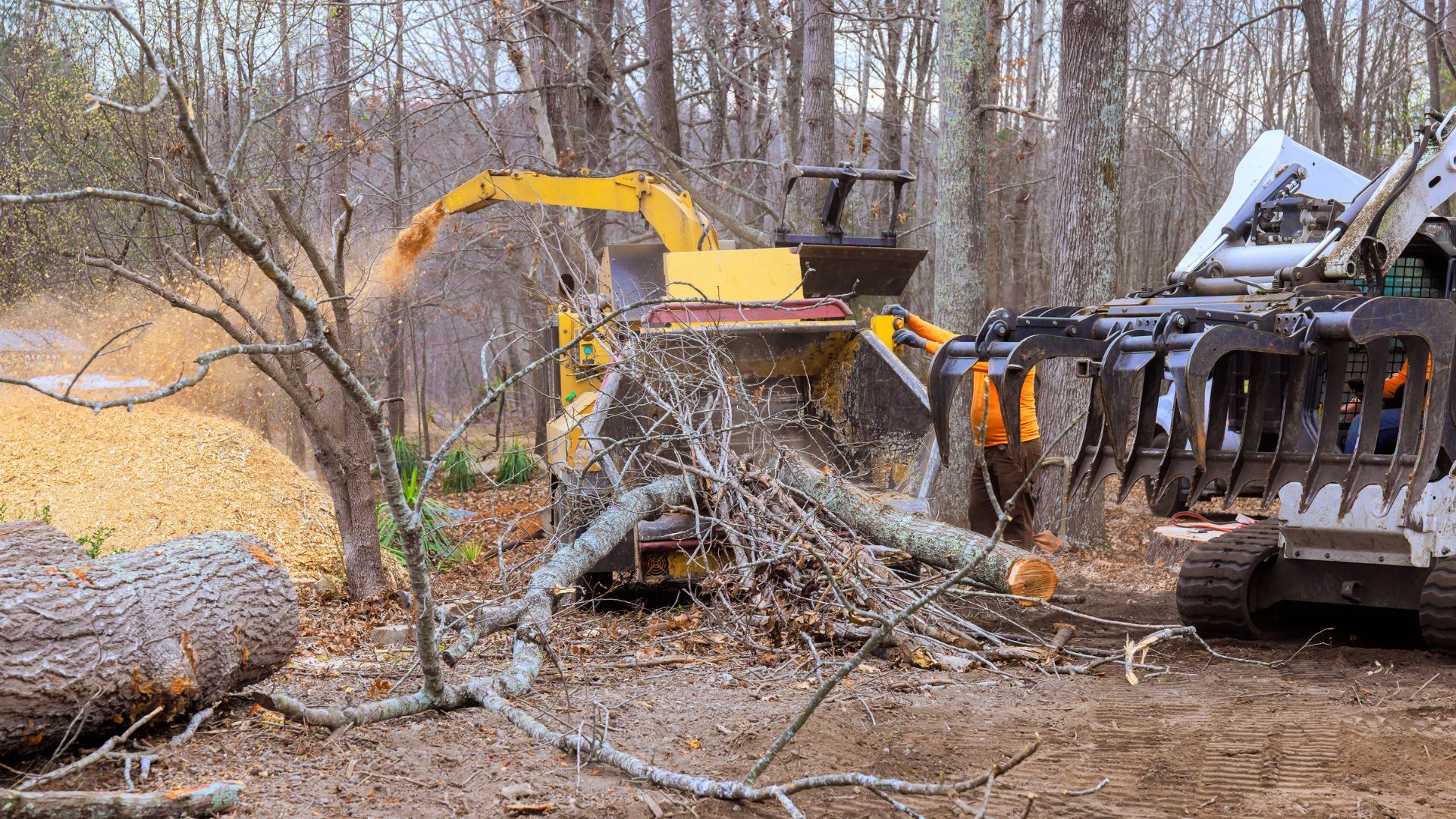
A tree down on the ground is not the same as a completed removal scope. Brush processing, log handling, stump work, and surface restoration need clear expectations. Comparing quotes is easier when each describes the same finish.

Scope item What to clarify Why it matters
Tree dismantling The identified tree and agreed extent Prevents confusion with other vegetation
Brush Chipping and handling arrangements Defines what leaves the site
Logs Removal or an agreed stacking location Avoids unwanted material remaining
Stump Whether grinding is included or added Removal does not automatically eliminate the stump
Ground finish Raking, chips, access effects, and restoration Cleanup is different from new landscaping
Additional work How changes will be discussed Prevents unapproved scope expansion

Our removal service includes on-site cleanup, with brush chipped and logs removed or stacked according to the agreed preference. Stump grinding can be included in a combined proposal. Our stump-grinding services are worth discussing before the removal if the next use depends on that space. Ask what remains after grinding and whether filling or lawn work is included.


Our Typical Pricing Guidance

We provide a free on-site assessment and exact written pricing for the proposed removal. Our typical published ranges are 500–1,200 for trees under 30 feet, 1,200–2,500 for trees 30–60 feet, and 2,500–5,000 or more for trees over 60 feet. A tight-access removal needs its own assessment because condition, structures, and handling constraints can substantially affect the work.

Tree size or cost factor Our typical pricing guidance What can change the proposal
Under 30 feet 500–1,200 Access, condition, and nearby features
30–60 feet 1,200–2,500 Canopy spread, structures, and handling
Over 60 feet 2,500–5,000 or more Complexity, hazards, and equipment needs
Stump grinding Confirm in the written scope Size, access, and desired finish
Restricted work route Assessed individually Carrying distance, staging, and protection

Decide Whether the Project Is Ready

  • Proceed to scheduling: Method, access, permissions, scope, and written price are understood.
  • Resolve access first: A fence, neighboring property, or equipment route remains undecided.
  • Request further assessment: Condition or utility concerns prevent a reliable plan.
  • Update the plan: The tree has changed since the estimate or new damage has appeared.
  • Clarify the finish: Log handling, stump work, or restoration is not yet defined.


A final walk-through should compare the result with the agreed work. Point out questions about retained wood, the stump, or access areas while the scope is still easy to review together. The next phase, such as replanting or lawn restoration, can then be planned around the actual finished site.


Get a Removal Plan for Your Backyard

If a large tree in your Guilford backyard has limited access, we can assess the tree and explain a suitable removal plan. We also handle difficult residential removals in Madison and Clinton. Tell us about nearby roofs, fences, utility lines, and any recent change in the tree. The right method should follow the tree's condition and the site's limits.


Contact White Oak Tree & Landscaping or call 203-429-5660 to request a free on-site assessment. We will discuss access, material handling, cleanup, and any stump work you want included. Our written estimate explains the proposed scope before the job is scheduled. Keep people away from apparent hazards while the assessment or response is arranged.


Helpful Services and Related Reading

Share this article

Recent Posts

Yellow excavator clearing brush beside a skid steer in a wooded area during land clearing
By Mike James • November 10, 2026
Plan land clearing with a practical checklist for boundaries, trees, utilities, access, permits, mulch, and the finish of your Madison property.
Glowing carved jack-o'-lanterns lined up on grass at night in a park, lit orange under trees.
By Mike James • October 29, 2026
Learn five hazards around tree stumps, how to protect visitors, and when Clinton homeowners should consider stump grinding, cleanup, or site restoration.
Halloween pumpkins hanging in a tree, each carved with a different face, in a wooded area
By Mike James • October 29, 2026
Protect trees this Halloween with tips on safe attachments, branch loads, lighting, and pruning, and when Madison homeowners should request expert help.
Fallen tree branches drape over a silver SUV parked beside a white house.
By Mike James • October 20, 2026
Learn how fallen branches and brush obstruct runoff, worsen ponding, and limit access, plus when Madison homeowners should arrange storm debris removal.
Large tree roots exposed on a dirt slope in a wooded forest area
By Mike James • October 20, 2026
Learn why saturated soil makes leaning trees less stable, which warning signs matter, and when Madison homeowners should request a professional assessment.
By Mike James • October 13, 2026
When Overgrown Land Becomes a Winter Access Problem on Madison Properties
By Mike James • October 13, 2026
What Dense Brush Can Hide Before Snow and Ice Arrive on a Madison Property
Excavator blade scraping dirt and dust on a forest trail
By Mike James • October 6, 2026
See five areas forestry mulching can reopen on Madison properties, how it works, what should remain, and how to plan the work safely before winter arrives.
Yellow backhoe loader with raised bucket on muddy ground near green trees and a building
By Mike James • October 6, 2026
Learn eight signs that overgrowth is hiding drainage, access, boundary, and safety problems on your Madison property before winter. Plan safe work now.
Dense green grass filling the frame, with a few yellow wildflowers scattered throughout.
By Mike James • September 29, 2026
Learn why invasive brush returns after forestry mulching, how Clinton property owners can manage regrowth, and what an effective follow-up plan includes.
Show More