Not every tree situation after a storm is an emergency. A limb on the lawn in an open area can wait until morning. A branch in the garden that missed everything important can be scheduled for cleanup later in the week. Knowing that not everything is urgent saves money and stress.
But some situations genuinely cannot wait, and recognizing the difference is what keeps a manageable problem from becoming a dangerous or far more expensive one overnight. A tree resting against the house, a limb tangled in power lines, a root plate lifting out of saturated ground, these are the calls where hours matter, sometimes minutes, and where professional equipment and experience are the only safe response.
Late summer on the Connecticut Shoreline is the calm before the fall storm season that tests every tree on the property. A homeowner who knows which scenarios are true emergencies before the storms arrive is a homeowner who responds correctly rather than guessing under pressure.
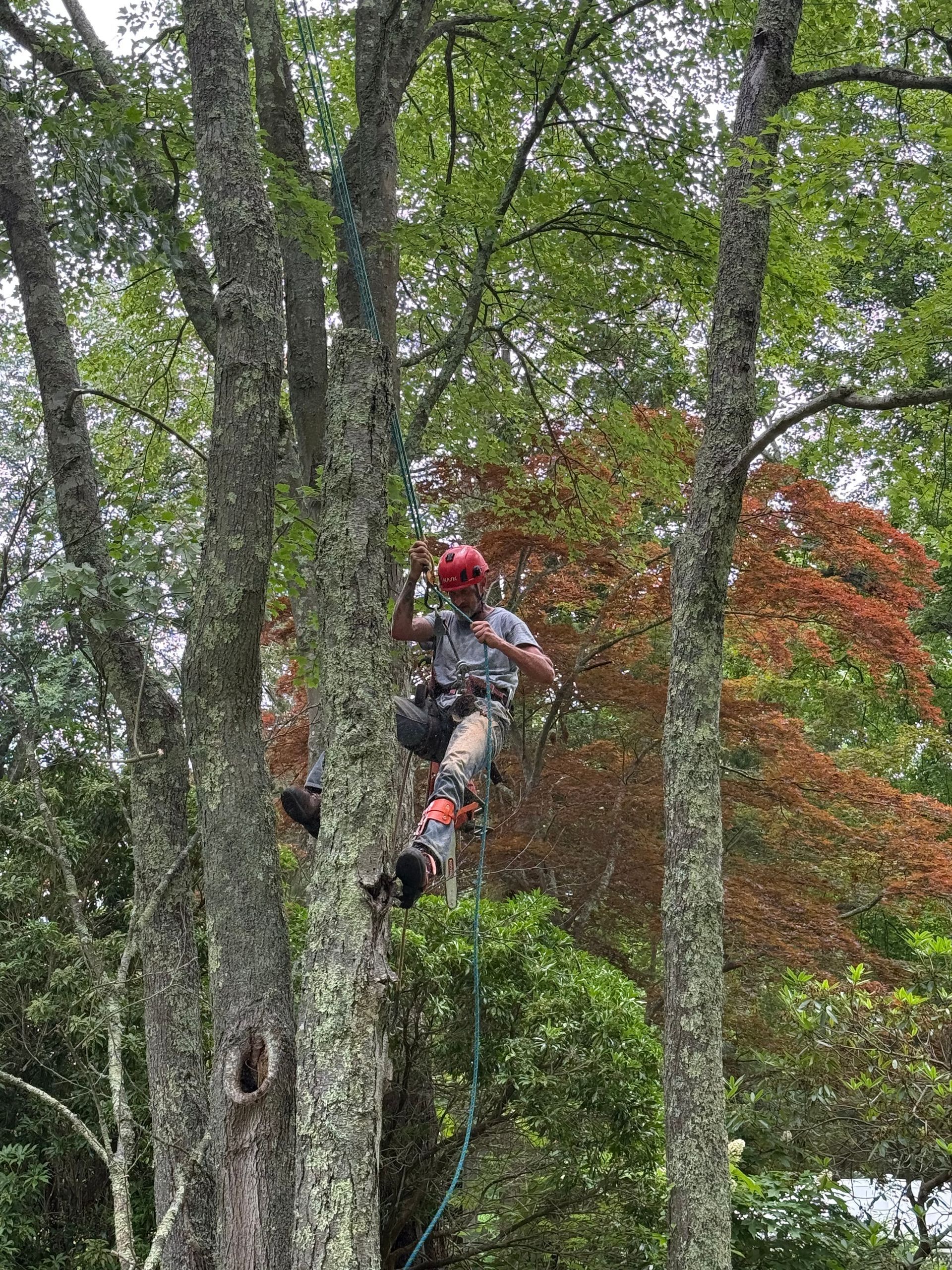
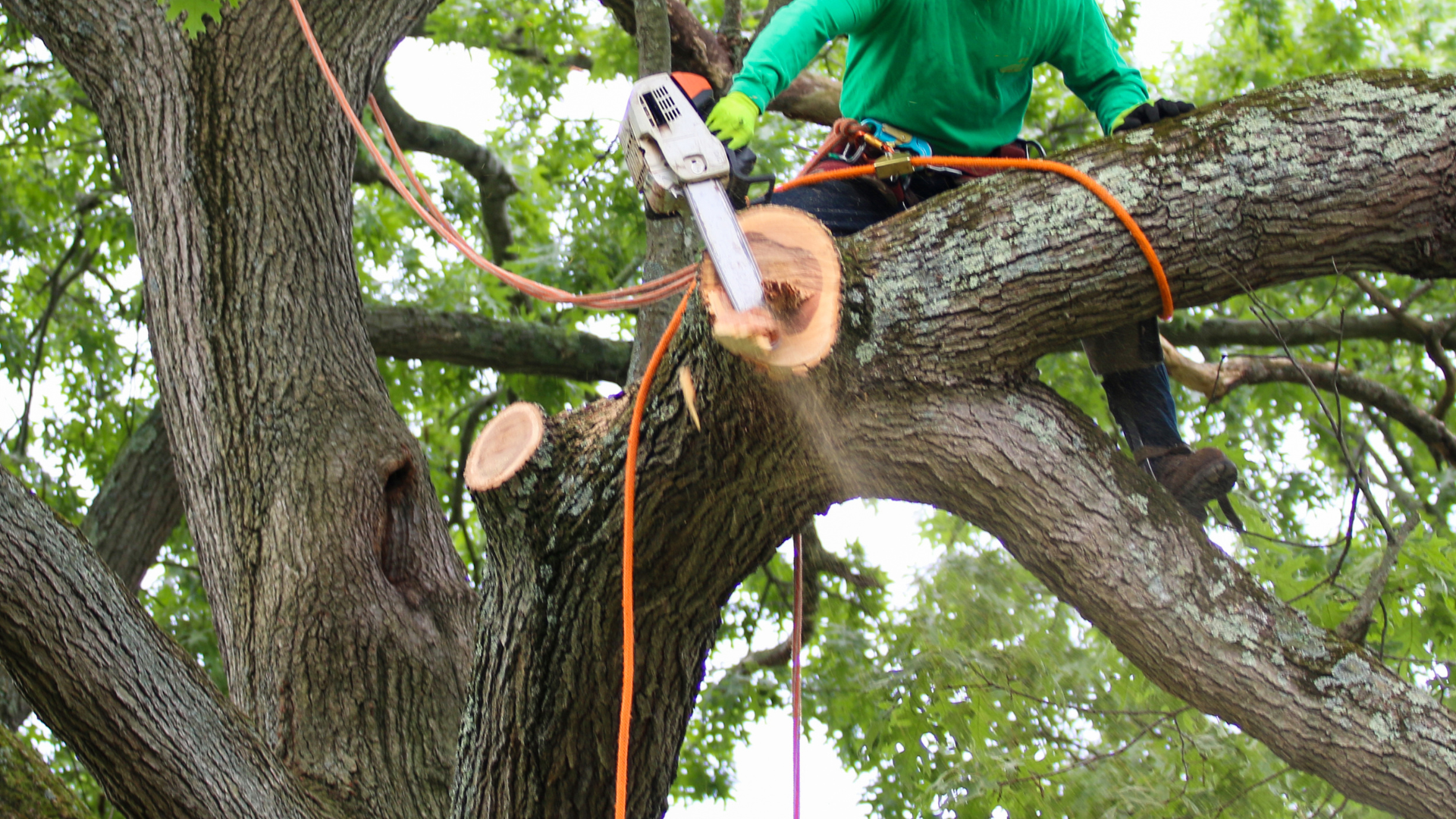
White Oak Tree and Landscaping has responded to storm emergencies across the CT Shoreline since 1991 as climbing specialists. These are the six scenarios where the call needs to happen immediately.
What Makes a Storm Tree Situation a Genuine Emergency
The line between "can wait" and "cannot wait" comes down to two questions: Is someone or something at immediate risk? Will the situation get worse before a scheduled crew can arrive?
A branch on an open lawn poses no ongoing risk. A tree leaning against a roof with the structure taking load does, because rain is entering, the tree can shift, and every hour of exposure compounds the damage. That distinction, whether the hazard is active and escalating, is what separates a cleanup job from an emergency.
The
USDA Forest Service identifies several conditions that create imminent tree failure risk, including cracks, root damage, and leaning with soil disturbance. When any of these conditions are present after a storm and the tree is positioned over a structure, a person, or a utility line, the situation meets the threshold for immediate response.
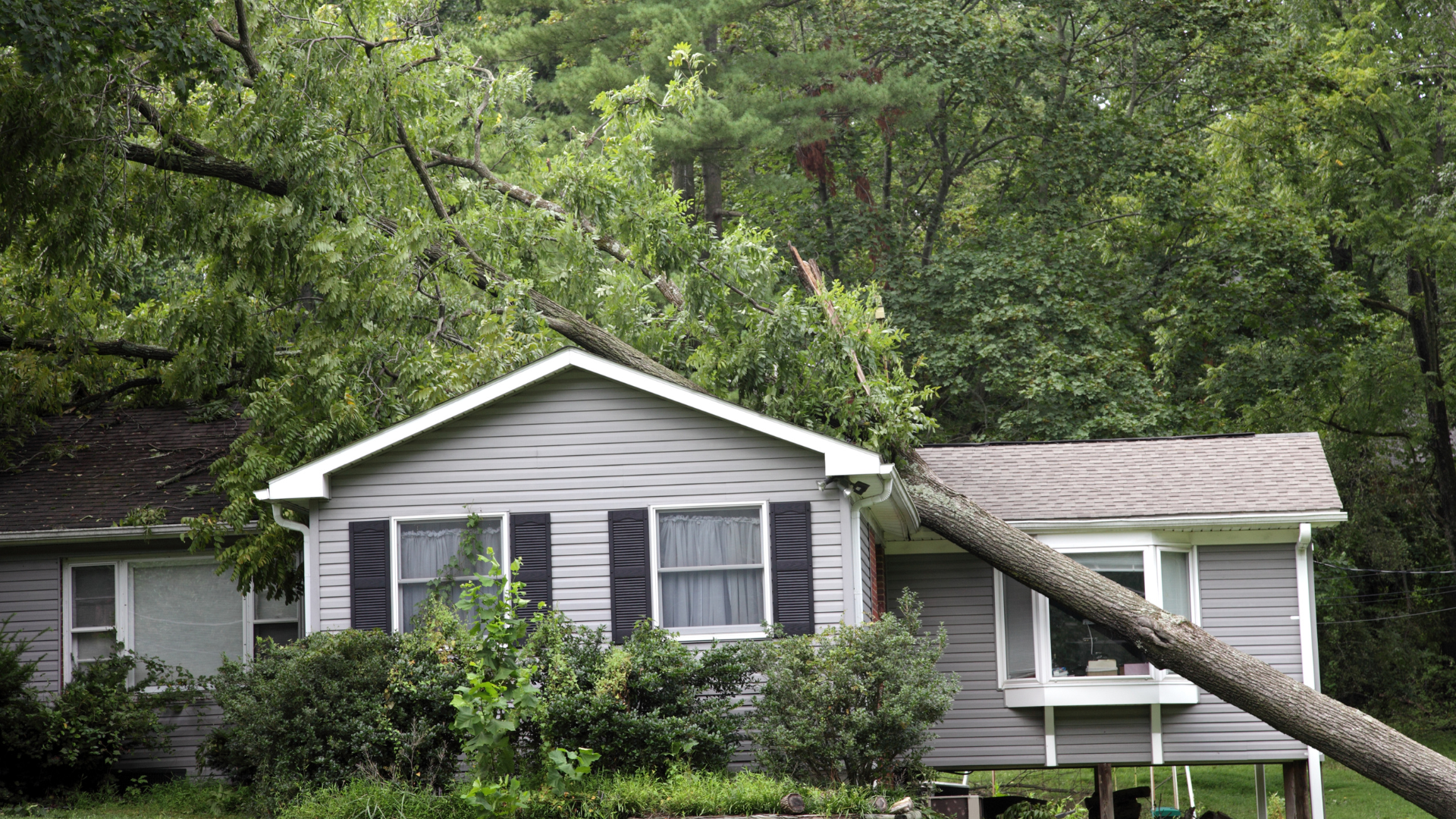
1. A Tree On or Partially Resting Against the House
This is the most common true emergency White Oak responds to on the CT Shoreline, and the one where the instinct to wait until morning costs the most.
A tree that has come to rest on a roof, wall, or attached structure is under active tension. The weight is distributed across the contact points in ways that can shift when the tree settles, when wind gusts push on it, or when rain adds weight to the canopy. The structure beneath it is taking a load it was not designed for, and every hour that passes with the tree in place is an hour of potential rain intrusion, further structural compression, and increasing removal complexity.
Why this cannot wait:
- The tree is under tension that can shift unpredictably
- The roof or wall beneath it may be compromised
- Rain entering through the breach compounds by the hour
- Removal gets harder as the tree settles into the structure
White Oak's climbing specialists rig and remove trees from structures in controlled sections, lowering each piece rather than dropping it, which is why this work requires experience and equipment that a general cleanup crew does not have.
2. A Tree or Branch in Contact With Power Lines
Any tree or branch touching, tangled in, or hanging across a power line is an electrocution hazard that extends well beyond the visible contact point, and no one should approach it.
A live power line in contact with a tree can energize the tree, the ground around it, and anything in contact with either. In wet conditions after a storm, the danger zone expands because water conducts electricity across surfaces and through the saturated ground. The
USDA Forest Service notes that storm-damaged limbs can fall long after the weather passes, which means a branch draped across a line can drop at any time, bringing the line with it.
The correct sequence:
- Stay away from the tree and the surrounding area
- Call the utility provider immediately to de-energize the line
- Do not attempt to move the tree, branch, or anything near the line
- Call White Oak only after the utility confirms the line is dead
This is the one scenario where the tree crew waits for the utility, not the other way around. No tree removal near a live line is safe, regardless of how experienced the crew is.
3. A Root Plate That Has Lifted but the Tree Has Not Fully Fallen
A tree whose root plate has visibly heaved, with soil cracking or mounding on one side and the trunk showing a new lean, is a tree in the process of falling. It may hold for hours. It may release in seconds. And the direction it goes is not predictable from the ground.
This scenario is especially common on the CT Shoreline after sustained rain events that saturate the soil before or during a storm. The saturated ground reduces the mechanical grip of the root system, and a tree that was stable in dry soil can begin tipping once that grip weakens. The visible signs, soil heaving, roots pulling free, a gap opening between the trunk base and the ground, mean the failure has already begun.
Why this is immediate:
- The tree is actively in the process of failing
- The remaining root contact is less than what held it before
- Wind, rain, or simply gravity can complete the fall
- If it is positioned over a structure or occupied area, the risk is live
A root plate failure on a mature Shoreline oak or maple puts the full weight of the tree in play. This is a situation where the assessment and response need to happen the same day, not the next available appointment.
4. A Large Hanging Branch Directly Over an Occupied Area
A broken branch that remains suspended in the canopy, held in place by surrounding limbs rather than falling cleanly, is one of the most dangerous post-storm conditions because it looks stable but is not.
Arborists call these widow makers. The branch is broken, its weight is resting on whatever caught it, and gravity is working on it continuously. It can release without any additional wind, movement, or provocation, and when it does, it falls straight down onto whatever is beneath it. When that location is a home entrance, a driveway, a walkway, or a play area, the hazard is active and immediate.
What makes hangers dangerous:
- They appear stable from below but are held loosely
- Gravity works on them continuously
- No additional wind is needed to trigger the release
- They fall directly downward onto whatever is below
The size of the branch matters. A small twig caught in the canopy is debris. A limb six inches in diameter or larger hanging directly over a doorway or driveway is a genuine emergency. White Oak's climbers identify and remove hangers from inside the canopy where the holding points can be assessed and the branch lowered under control.
5. A Tree Blocking the Only Exit From the Property
This is a safety emergency that has nothing to do with the tree itself. When a fallen tree blocks the driveway or the only road access to a property, the occupants cannot leave and emergency vehicles cannot reach the home.
On residential properties in Clinton, Madison, Westbrook, and Old Saybrook where many lots have a single driveway and no alternative exit, a large tree across the drive means the household is functionally stranded until the tree is cleared. If a medical emergency, a fire, or any other urgent situation arises while the exit is blocked, the consequences compound beyond the tree itself.
Why this is treated as immediate:
- The household cannot leave the property
- Emergency vehicles cannot access the home
- The blockage creates a safety isolation problem
- Clearing a path is the minimum to restore access
White Oak prioritizes blocked-access situations as emergencies alongside structural contact and power line calls because the safety consequence is not about the tree. It is about what happens if the occupants need to leave and cannot.
6. Multiple Trees Showing Failure on the Same Property
When a storm brings down one tree and the remaining trees on the property are showing cracks, new leans, or lifted root plates, the first failure was the warning, not the whole event.
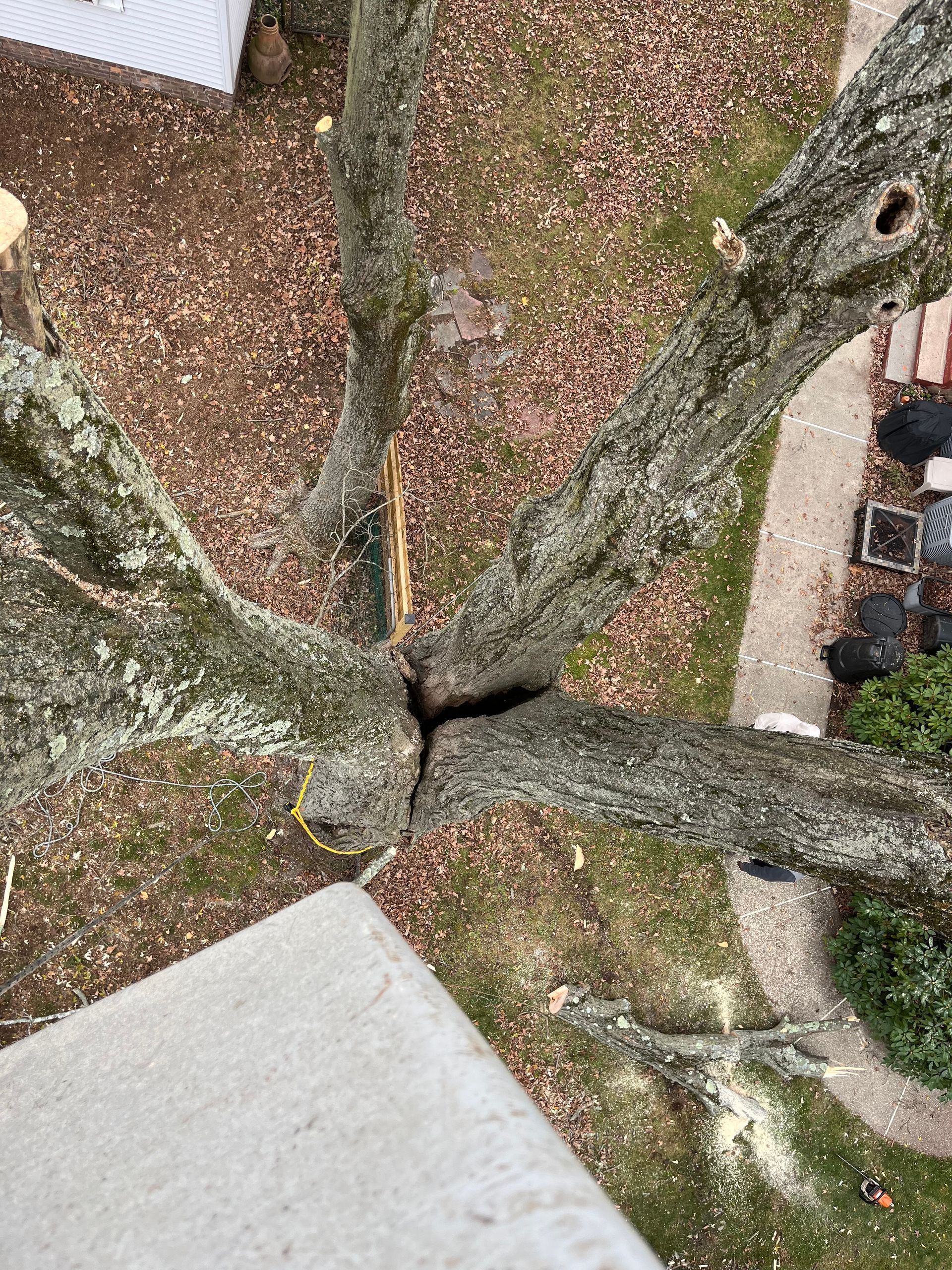
A storm severe enough to take down one tree has stressed every other tree in the same wind and saturated soil conditions. The trees that did not fall are not necessarily safe. They may have developed cracks, partial root failures, or structural compromises that are not yet visible from the ground but will complete under the next loading event. On properties with several mature trees in close proximity, which is common on wooded Shoreline lots in Clinton, Westbrook, and Guilford, a single failure should trigger a property-wide assessment.
Why multiple-tree situations escalate:
- The same conditions that failed one tree are affecting the others
- Cracks and root movement may not be visible from below
- A second failure can follow hours or days after the first
- Adjacent trees sometimes take each other out in sequence
White Oak assesses the full property canopy after every emergency removal, specifically looking for the next trees likely to fail under the same conditions. That assessment is part of the emergency response, not a separate charge.
The Difference Between Emergency and Cleanup
Understanding which category a situation falls into helps homeowners respond correctly, spend appropriately, and avoid either panicking over a non-emergency or underreacting to a genuine one.