How Connecticut Nor'easters and Ice Storms Create the Emergency Tree Situations That Cannot Wait Until Morning

Mike James • August 11, 2026

Why This Decision Matters More on CT Shoreline Properties

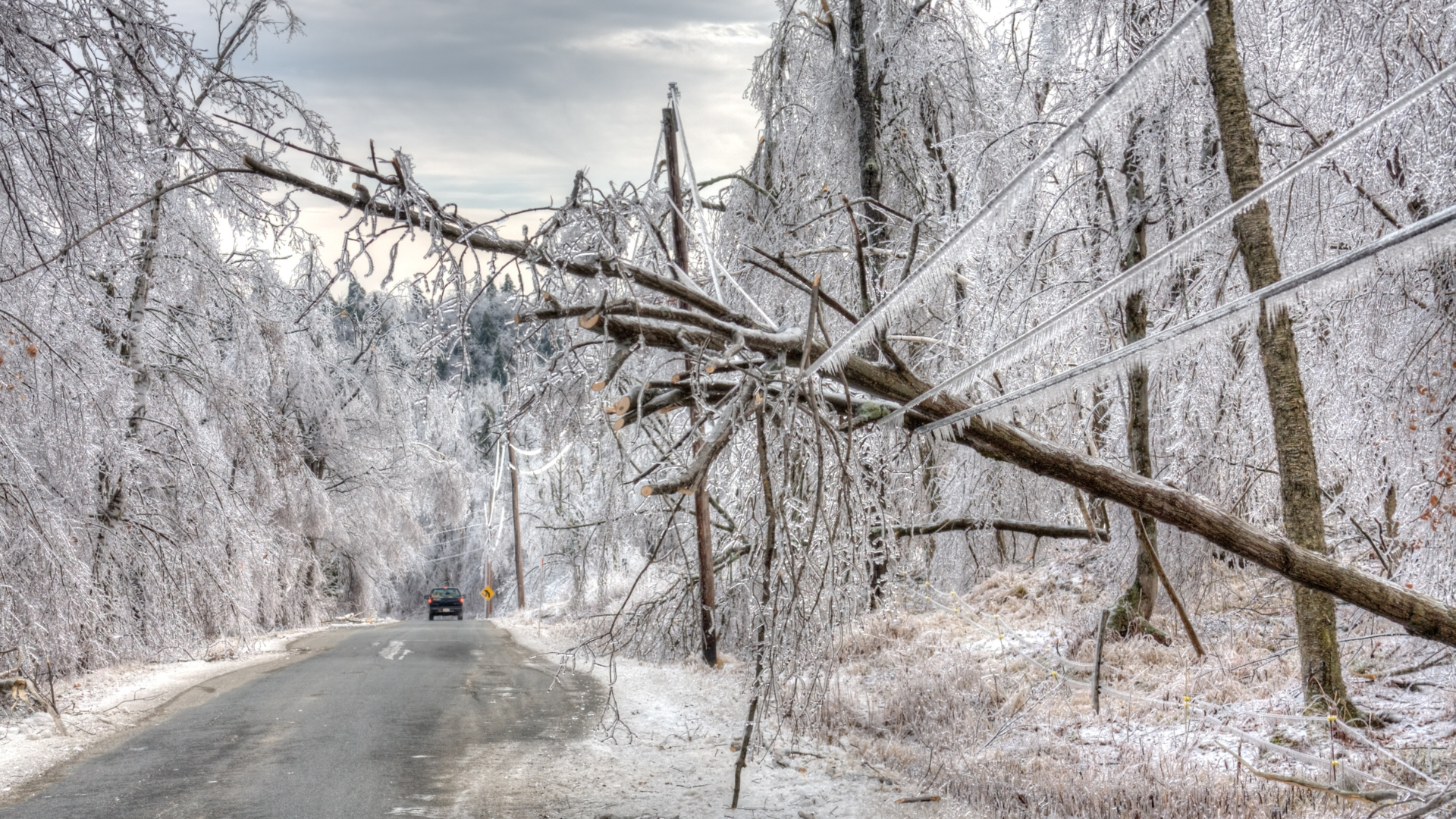
Not every tree emergency is created the same way. A summer thunderstorm knocks a limb down, and by morning it is safe to assess the damage, call for help, and plan the cleanup. A nor'easter or an ice storm on the Connecticut Shoreline is a different situation entirely, because the storm does not end in thirty minutes, the damage continues building for hours, and the conditions that make trees dangerous, sustained wind, ice loading, and saturated soil, persist long after the initial failure.


August may seem early to think about nor'easter season, but the first significant coastal storms can arrive as early as October, and the trees that fail in those storms are the ones whose condition was already compromised heading in. Late summer is the window to assess vulnerable trees, address obvious hazards, and have a plan in place before the first sustained storm arrives.


White Oak Tree and Landscaping has responded to emergency tree situations across the Connecticut Shoreline since 1991 as climbing specialists. This guide explains why nor'easters and ice storms produce the specific emergencies that cannot wait and what homeowners should know before and during them.


What Makes Nor'easters and Ice Storms Different From Summer Storms

The Connecticut DEEP Coastal Hazards primer describes the nor'easter as a defining weather feature for Connecticut's coast, producing sustained high winds, storm surges, and heavy precipitation that impact coastal communities. The NOAA Connecticut State Climate Summary documents that extreme precipitation events have become more frequent in recent decades. These are the storms that produce the tree emergencies other weather events do not.


The difference is duration and loading type:

Storm type Duration Primary loading Soil condition Tree failure pattern
Summer thunderstorm 30 to 60 minutes Brief high wind gust Usually dry Single-event branch or top failure
Nor'easter 12 to 36 hours Sustained wind and rain Saturated from hours of rain Progressive, cumulative failures
Ice storm Hours to days Static ice weight Often frozen Widespread branch snapping under load
Tropical remnant 6 to 18 hours Heavy rain, moderate wind Severely saturated Root plate failures from soil saturation
Worker in high-vis gear and blue helmet cuts branches from a tree beside a building.

The practical point for homeowners: a summer storm does its damage and moves on. A nor'easter or ice storm keeps working on the trees for hours, and the conditions that caused the first failure, saturated soil, sustained wind, or accumulating ice, continue to threaten the remaining trees throughout the event. That is why some of these situations cannot wait.


Why Saturated Soil Is the Hidden Factor

Most people think of wind as the reason trees fail in storms. On the CT Shoreline, the more dangerous factor is often what happens underground before the wind arrives.


A nor'easter typically delivers heavy rain for hours before the peak wind arrives. That rain saturates the soil, which dramatically reduces the mechanical grip the root system has in the ground. A mature oak or maple that would stand through a strong wind gust in dry soil can fail when that same wind arrives after twelve hours of rain has loosened the root plate's hold.


Why this matters for emergency response:

  • A tree that partially fails early in a nor'easter may continue shifting as the storm progresses
  • Saturated soil means the root plate can move progressively rather than holding or failing cleanly
  • Trees near the one that failed are in the same saturated soil and under the same sustained loading
  • The hazard is not static during the storm, it is evolving


The USDA Forest Service identifies root problems and soil disturbance as indicators of potential tree failure, and notes that root defects can cause a whole tree to fail without visible crown damage. During a nor'easter, that root-failure risk extends to every tree in the saturated zone.


The Five Situations That Cannot Wait Until Morning

White Oak's emergency response prioritizes based on the hazard to people and structures. These are the situations where waiting is not an option:


A tree on or partially on a structure. A tree that has come to rest on a roof, wall, or carport is under active tension that can shift. The building beneath it may be compromised. Interior exposure to rain during a nor'easter compounds the damage by the hour.


A tree on or tangled with power lines. A tree in contact with live power lines creates an immediate electrocution hazard that extends to the surrounding ground, particularly in wet conditions. No one should approach. Call the utility first, then the tree crew.


A root plate that has lifted but the tree has not fully fallen. A tree leaning on a partially failed root plate, with soil heaving visible at the base, is in the process of falling. It may hold for hours or release in seconds, and the direction is not predictable. If it is positioned over a home, vehicle, or area where people are present, it needs assessment immediately.


Understanding what ice loading does compared to wind loading helps explain why ice storms produce such different damage:

Factor Wind damage Ice damage
What fails Weak unions, dead limbs Any branch overloaded
Failure type Dynamic, branches snap Static, branches sag then break
Sound warning Cracking, then a break Quiet, then sudden
Which trees are affected Structurally weak ones Even healthy, sound trees
Duration of risk While wind blows Until ice melts, sometimes days

Hanging branches directly over occupied spaces. A widow maker, a broken branch suspended in the canopy by surrounding limbs, can release without warning. During a nor'easter, the sustained wind and continued loading make that release more likely, not less. Branches hanging directly over a home entrance, a driveway, or a walkway are hazards that need to be addressed before someone walks under them.


Multiple trees showing stress on the same property. When one tree fails during a nor'easter, the trees around it have absorbed the same sustained loading in the same saturated soil. A property where one failure has already occurred is a property where the remaining trees need urgent assessment because the conditions that caused the first failure are still active.


What to Do During a Nor'easter Tree Emergency

When a tree emergency happens during an active nor'easter, the conditions outside are dangerous and the instinct to go assess the damage needs to be checked.


Stay inside and away from the tree. The storm is still active. Wind gusts, falling branches, and potential power line contact make the area around a failed tree extremely dangerous during the event. Assessment happens from inside or from a safe distance after confirming no lines are down.


Call the utility if power lines are involved. Downed or sagging lines near a tree create a hazard zone that extends well beyond the visible contact point, especially in wet ground. Call the utility before calling a tree service. The line must be confirmed dead before anyone approaches.


Document from a safe distance. Photographs and video from inside the home or from a safe distance support insurance claims and help the tree crew assess the situation before arrival.


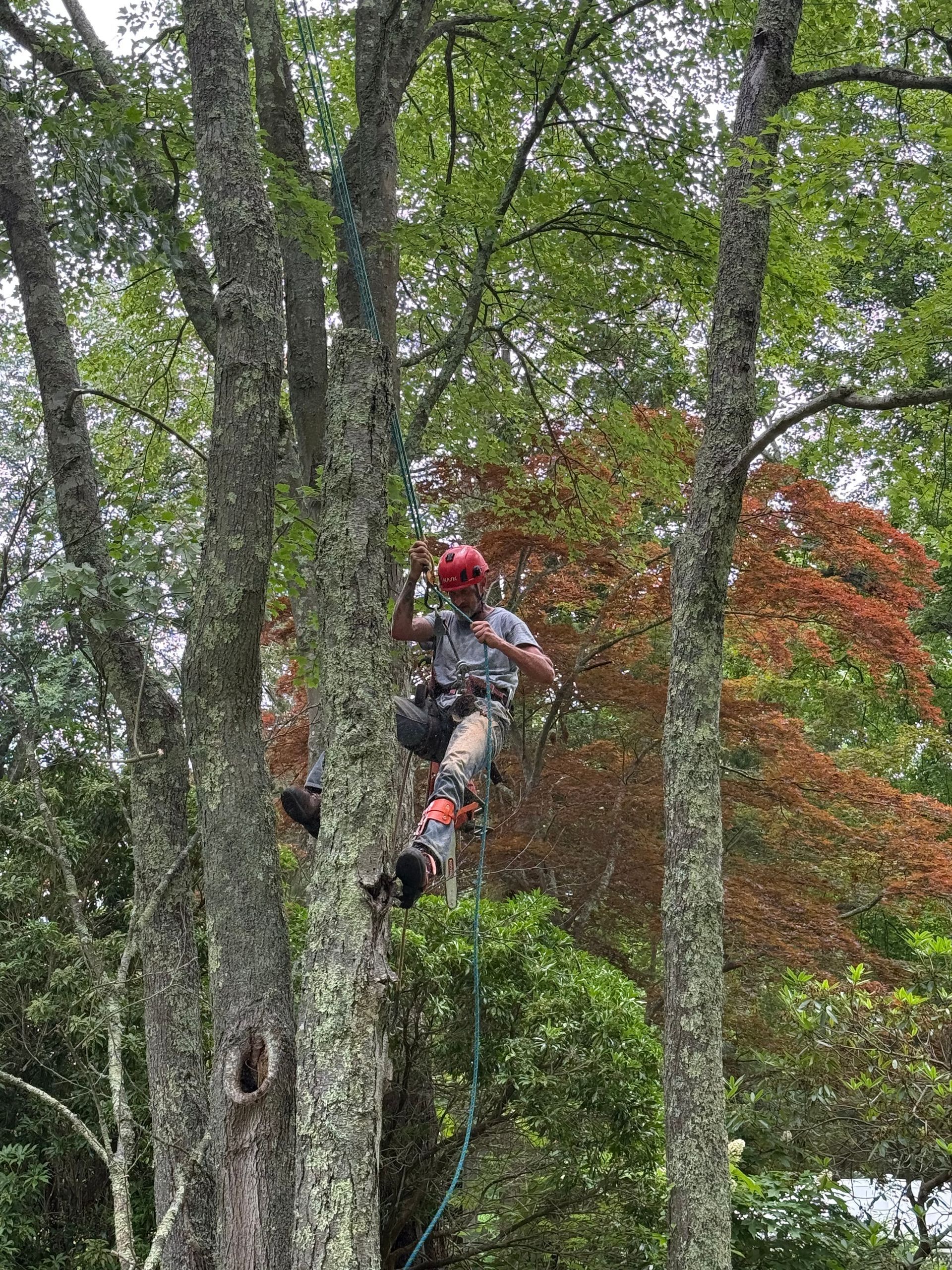
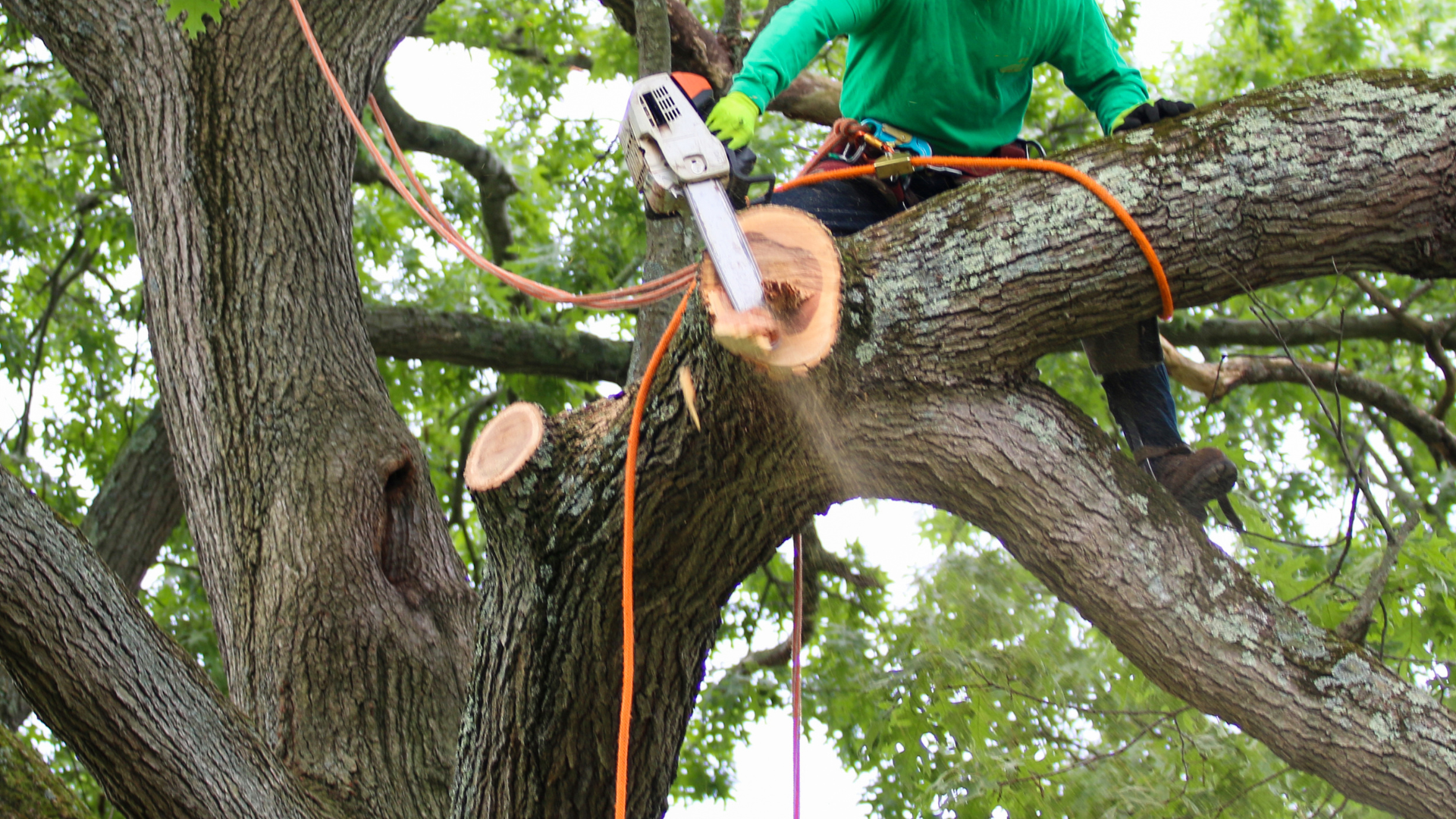
Call White Oak for emergency response. White Oak's crew responds to storm emergencies across the Shoreline and can assess, rig, and remove trees from structures in conditions where precision matters. As climbing specialists, the crew works from inside the canopy using ropes and rigging on jobs where equipment access is limited by storm conditions, tight lots, or soft saturated ground.


What Pre-Storm Assessment Looks Like

The emergencies described above are the ones that could not be prevented in the moment. Many of them, however, can be prevented in advance with a pre-storm assessment that identifies the trees most likely to fail.


The assessment checks for:

  • Dead branches in the canopy that become projectiles in any wind
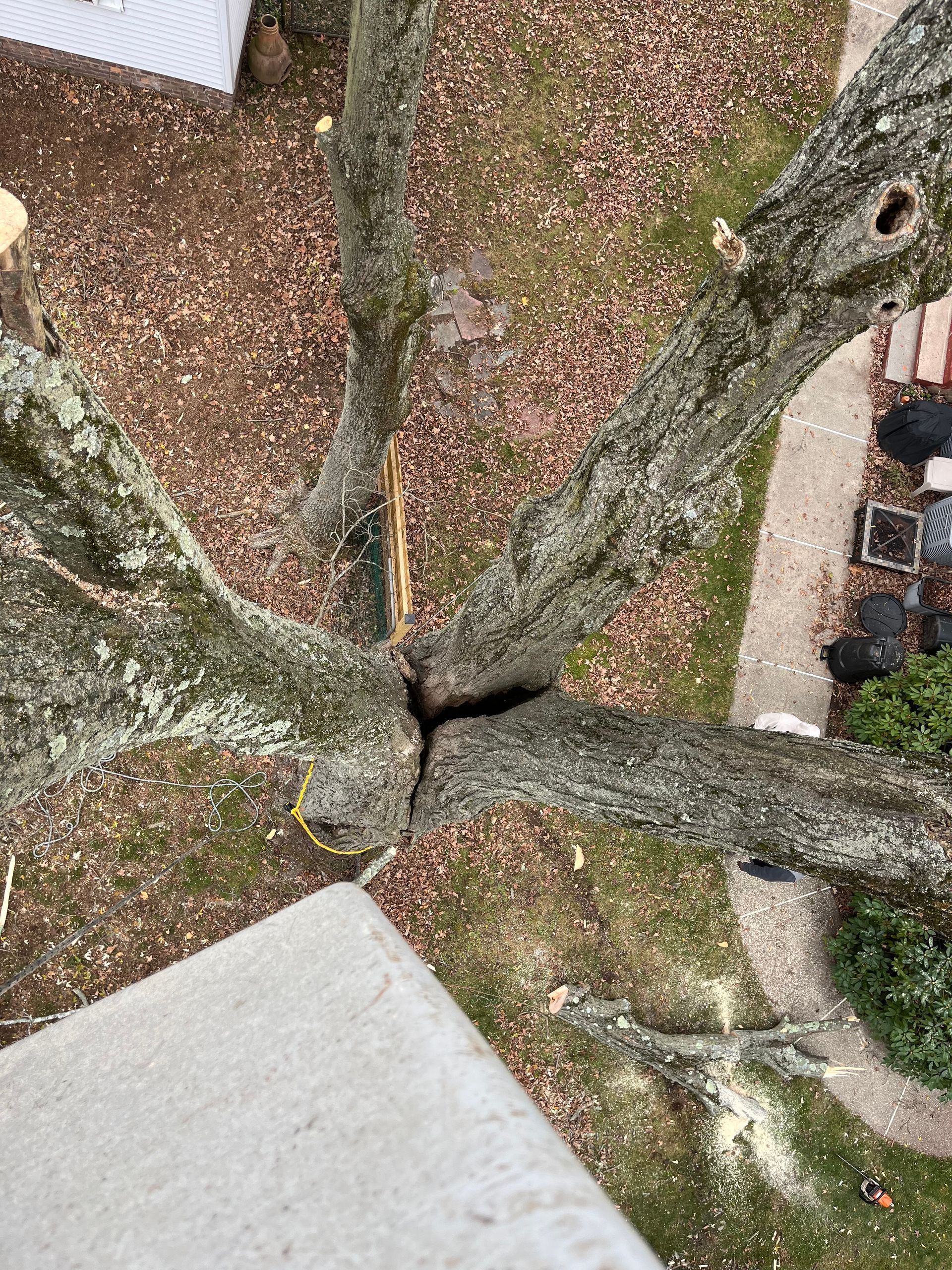
  • Co-dominant stems with included bark, the weak unions that split under sustained loading
  • Trees with a lean, especially a new or worsening lean
  • Root zone disturbance, construction damage, or soil changes
  • Overextended limbs positioned over structures or power lines


Addressing these in August, while conditions are calm, is vastly cheaper and safer than responding after a November nor'easter turns them into emergencies. White Oak's tree trimming and pruning service handles the structural work that reduces storm risk, and the article on 6 reasons tree trimming reduces storm damage risk covers each mechanism in detail.


For active emergencies, the emergency tree service is available throughout Clinton, Madison, Old Saybrook, Westbrook, and Guilford. For the deeper question of whether a storm-damaged tree can be repaired or needs removal, the article on storm-damaged tree repair versus emergency removal walks through how that decision gets made.

If you want to get ahead of nor'easter season on your Clinton, Madison, Westbrook, Old Saybrook, or Guilford property, White Oak Tree and Landscaping can assess your trees now and address the hazards while conditions are calm. And when a storm produces an emergency that cannot wait, the crew is available to respond.

Emergency Tree Service | Tree Trimming and Pruning | Tree Removal | Contact White Oak

(203) 429-5660 | whiteoaktreect.com | Clinton, CT | Since 1991 | HIC #0706616

Share this article

Recent Posts

Snow-dusted wooden house with a bare tree leaning across the roof under a cloudy sky
By Mike James August 25, 2026
Not every downed branch is an emergency, but some are. White Oak Tree explains 6 storm damage scenarios in Clinton CT that need a professional immediately.
Yellow backhoe clearing a muddy wooded path beside a house in winter
By Mike James August 4, 2026
Both clear overgrown land, but they leave the ground very differently. White Oak Tree explains which clearing method fits your CT Shoreline property best.
Person using an orange chainsaw to cut a fallen tree branch in a leafy yard
By Mike James July 29, 2026
Proper tree trimming measurably lowers storm damage risk on CT Shoreline properties. White Oak Tree explains the 6 reasons it works, season after season.
Tree fallen across sidewalk beside house, blocking the path after a storm.
By Mike James July 21, 2026
After a storm hits Clinton, Madison, Old Saybrook, or Guilford, the question is not just what happened to the tree. It is whether the tree can be repaired, or whether it needs to come down now. White Oak Tree explains how that decision gets made correctly.
Calm lakeside with docks, boats, and houses among tall green trees in warm sunlight
By Mike James July 17, 2026
Restoring a Long Island Sound view on a Clinton CT property is not about taking down every tree in the way. White Oak Tree explains what the work actually involves, why it requires a climber, and how to do it without damaging the trees you want to keep.
Orange excavator lifting a tree trunk beside a house in a suburban yard
By Mike James July 7, 2026
Not every blocked water view needs full tree removal. Learn when White Oak recommends canopy thinning, selective removal, or both for CT shoreline properties.
Person in climbing gear scaling a tree beside a wooden deck, secured with ropes and harness.
By Mike James June 30, 2026
A bucket truck cannot reach every tree. White Oak Tree & Landscaping explains why climbing specialists are essential for emergency tree removal in tight CT Shoreline yards where access is the deciding factor.
Pruning shears cutting bare tree branches against a blue sky
By Mike James June 22, 2026
Tree pruning is not just about appearance. White Oak Tree & Landscaping explains what pruning actually involves, the ANSI A300 standards that govern it, and why the trees on your Connecticut shoreline property need it regularly.
By Mike James June 17, 2026
Not every tree service in Clinton CT is qualified, insured, or licensed the way Connecticut law requires. White Oak Tree & Landscaping explains exactly what to verify before anyone sets foot in your yard.
A fallen tree blocks a residential street after storm damage, with a damaged house and power lines nearby.
By Mike James June 15, 2026
Some trees on Connecticut shoreline properties are past the point of waiting but haven't failed yet. White Oak Tree & Landscaping explains the warning signs, the window, and why acting now costs less than acting after.
Show More